





What separates someone who’d donate a kidney to a stranger from someone who might steal one? Abigail Marsh explains the neuroscience of fear on part 1 of 2. [Find part 2 here!]
What We Discuss with Dr. Abigail Marsh:
- Psychopaths don’t lack all emotion — they specifically lack the ability to recognize and feel fear. Where most people see terror on someone’s face, a psychopath sees something unidentifiable — a deficit that fundamentally rewires how they relate to other humans.
- Many of psychology’s most famous studies — the Stanford Prison Experiment, the Milgram shock test, the Kitty Genovese bystander story — turned out to be deeply flawed or outright fabricated. Humans are actually far more compassionate than these narratives suggest; CCTV data shows bystanders intervene 90% of the time.
- Psychopathy isn’t caused by “bad parenting” in any simple way — it’s a neurodevelopmental disorder with significant genetic heritability, much like autism or ADHD. Blaming parents echoes the same harmful logic that once attributed schizophrenia to “cold mothers.”
- Household chaos — literal noise, inconsistent rules, revolving caregivers — makes it significantly harder for children to learn behavioral patterns. It’s not just abuse that derails development; it’s the inability to pick out a reliable signal from an overwhelming amount of environmental noise.
- The sweet spot of effective parenting — and really, of shaping better humans — is combining genuine warmth with consistent boundaries. Love without structure breeds entitlement; structure without love breeds resentment. But together, they build the foundation for compassion and resilience in any child.
- And much more… [This is part one of a two-part episode. Find part two here!]
Like this show? Please leave us a review here — even one sentence helps! Consider including your Twitter handle so we can thank you personally!
When someone runs into a burning building to save a stranger, they’re not fearless. They’re terrified. Every nerve is screaming at them to turn around, and they charge forward anyway. On the opposite end of the spectrum is someone who’s never felt fear at all, who looks at a face twisted in terror and genuinely can’t identify what they’re seeing. These two people seem like they belong in completely different psychological universes, but what if they’re actually on the same neurological continuum? And what if most of what we’ve been taught about human nature — from the Stanford Prison Experiment to the famous bystander murder in New York — was built on studies that turned out to be deeply flawed or outright fabricated? The real data tells us that humans are far more compassionate than we’ve been led to believe, with bystanders stepping in to help 90% of the time when someone is attacked in public.
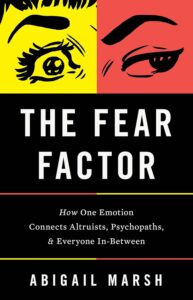
Neuroscientist Dr. Abigail Marsh (author of The Fear Factor: How One Emotion Connects Altruists, Psychopaths, and Everyone In-Between) has spent her career mapping the brain science of fear, psychopathy, and extreme altruism, and she walks us through discoveries that rewrite the conventional wisdom. Abigail explains why psychopaths — roughly one to two percent of the population — don’t just lack empathy but specifically can’t recognize or experience fear, sometimes reporting excitement where the rest of us would feel dread. She digs into the surprising heritability of aggression, why blaming “bad parenting” for psychopathy echoes the same debunked logic that once attributed autism to “refrigerator mothers,” and how household chaos can quietly derail a child’s behavioral development in ways that have nothing to do with abuse. She also reveals the counterintuitive parenting approach that actually works with psychopathic children — overwhelming them with warmth and love rather than escalating punishment. Whether you’re a parent trying to raise compassionate kids, someone fascinated by the darker corners of neuroscience, or just a person who wants to understand why your college roommate had zero emotional guardrails, this conversation will fundamentally reshape how you think about the wiring behind who we are. Listen, learn, and enjoy! [This is part one of a two-part episode. Find part two here!]
Please Scroll Down for Featured Resources and Transcript!
Please note that some links on this page (books, movies, music, etc.) lead to affiliate programs for which The Jordan Harbinger Show receives compensation. It’s just one of the ways we keep the lights on around here. We appreciate your support!
- Sign up for Six-Minute Networking — our free networking and relationship development mini-course — at jordanharbinger.com/course!
- Subscribe to our once-a-week Wee Bit Wiser newsletter today and start filling your Wednesdays with wisdom!
- Do you even Reddit, bro? Join us at r/JordanHarbinger!
This Episode Is Sponsored By:
- BetterHelp: 10% off first month: betterhelp.com/jordan
- ButcherBox: Free protein for a year + $20 off first box: butcherbox.com/jordan
- DeleteMe: 20% off: joindeleteme.com/jordan, code JORDAN
- Wayfair: Start renovating: wayfair.com
- Progressive Insurance: Free online quote: progressive.com
- The President’s Daily Brief: Listen here or wherever you find fine podcasts!
Thanks, Dr. Abigail Marsh!
Click here to let Jordan know about your number one takeaway from this episode!
And if you want us to answer your questions on one of our upcoming weekly Feedback Friday episodes, drop us a line at friday@jordanharbinger.com.
Resources from This Episode:
- The Fear Factor: How One Emotion Connects Altruists, Psychopaths, and Everyone In-Between by Abigail Marsh | Amazon
- Abigail Marsh: Why Some People Are More Altruistic than Others | TED Talk
- Website | Abigail Marsh
- The Neuroscientist Who Discovered He Was a Psychopath | Smithsonian Magazine
- The Psychopath Inside: A Neuroscientist’s Personal Journey into the Dark Side of the Brain by James Fallon | Amazon
- James Fallon | How to Spot a Psychopath | The Jordan Harbinger Show
- Oliver Sacks Put Himself into His Case Studies: What Was the Cost? | The New Yorker
- Is “Catch Me If You Can” a True Story? This Book Suggests It Isn’t | WHYY
- Frank Abagnale | Scam Me If You Can | The Jordan Harbinger Show
- The Greatest Hoax on Earth: Catching Truth, While We Can by Alan C. Logan | Amazon
- Newark Mayor Cory Booker Rescues Neighbor from Fire | ABC News
- Alex Honnold Free Solos Taipei 101, One of the World’s Tallest Buildings | CNN
- Disproving the Bystander Effect: CCTV Study Finds People Intervene in Conflict More Than Expected | New Atlas
- Would I Be Helped? Cross-National CCTV Footage Shows That Intervention Is the Norm in Public Conflicts | American Psychologist
- Kitty Genovese: The Bystander Murder Myth Debunked | Wikipedia
- Humankind: A Hopeful History by Rutger Bregman | Amazon
- Rutger Bregman | Humankind: A Hopeful History | The Jordan Harbinger Show
- Stanford Prison Experiment: How Zimbardo Coached the Guards | Wikipedia
- Milgram Experiment: Obedience vs. Compassion Under Authority | Wikipedia
- Chase Hughes | Why Authority Is More Influential Than Skill | The Jordan Harbinger Show
- Confessions of a Sociopath: A Life Spent Hiding in Plain Sight by M.E. Thomas | Amazon
- Sociopath: A Memoir by Patric Gagne | Amazon
- Psychopathy Checklist-Revised (PCL-R): Measuring Psychopathy in Criminal Populations | Wikipedia
- The Amygdala: Brain Structure Behind Fear Processing and Empathy | Wikipedia
- Heritability of Antisocial Behavior and Psychopathic Traits | Psychological Medicine
- The Purple Gang: Detroit’s Prohibition-Era Jewish Organized Crime | Wikipedia
- Parent-Child Interaction Therapy (PCIT): Evidence-Based Intervention for Childhood Behavior Disorders | Wikipedia
- Parenting Styles: Permissive, Authoritarian, and Authoritative Approaches | Wikipedia
- Refrigerator Mother Theory: The Debunked Blame of Mothers for Autism and Schizophrenia | Wikipedia
1292: Abigail Marsh | How Fear Connects Us All Part One
This transcript is yet untouched by human hands. Please proceed with caution as we sort through what the robots have given us. We appreciate your patience!
Jordan Harbinger: [00:00:00] Coming up next on The Jordan Harbinger Show.
Dr. Abigail Marsh: I mean, TikTok and Instagram are the worst news ever for like all scientists because they're just drowning in misinformation. I, I hate that word, but they're bad information, especially about clinical psychology, and it's just so hard to like get heard about the chatter.
But I mean, one of the mistakes that people make is thinking that somehow, like being loving. And having standards and expectations and reinforcing misbehavior with consequences are somehow like opposite ends of the spectrum. And so like either you're a super permissive parent and you're loving and warm, and your kid can do anything they want and you're like, oh, I just need to give them more love.
That's no good, right? That's called permissive parenting. We know 100% that that is not gonna result in good consequences. Kids do end up with more behavior problems as well as more anxiety when they're raised that way. But then some parents go too far the opposite direction, where they're like, I wanna be super withholding and gr and stern and a really harsh punishment, and my kid gets no autonomy.
And that's called authoritarian parenting. And that's bad too, right? Kids do not turn out well when they're raised that way.[00:01:00]
Jordan Harbinger: Welcome to the show. I'm Jordan Harbinger. On The Jordan Harbinger Show, we decode the stories, secrets, and skills of the world's most fascinating people and turn their wisdom into practical advice that you can use to impact your own life and those around you. Our mission is to help you become a better informed, more critical thinker through long form conversations with a variety of amazing folks, from spies to CEOs, athletes, authors, thinkers, performers, even the occasional neuroscientist, Russian chess grandmaster, cold case homicide investigator, or hostage negotiator.
And if you're new to the show, we wanna tell your friends about the show. I suggest our episode starter packs. These are collections of our favorite episodes on topics like persuasion and negotiation, psychology, geopolitics, disinformation, China, North Korea, crime, and cults and more. That'll help new listeners get a taste of everything we do here on the show.
Just visit jordanharbinger.com/start or search for us in your Spotify app to get started. Today we're talking about psychopaths, extreme altruists, and the thin neurological line between donating a kidney to a stranger and maybe stealing a kidney from a stranger. We've all heard the classics. [00:02:00] Stanford Prison Experiment, Milgram’s participants shocking someone while they scream, and the whole bystanders did nothing murders in New York. These studies shaped how we think about human nature. The problem is a lot of that stuff turned out to be total garbage. So if the psychology canon is shaky, what's actually true about who we are?
Why are one to 2% of the population clinically psychopathic? But nearly 50% of criminals meet the criteria? Why do psychopaths struggle to recognize fear in other people's faces? Like they've never seen the color red? Why don't they report feeling fear at all? But instead, curiosity on the other extreme, what kind of brain wiring makes somebody donate a kidney to a complete stranger?
Today we're diving into the neuroscience of fear psychopathy, extreme altruism, super face recognizers. Whether nature versus nurture is the wrong question entirely. And whether someday we'll be able to predict who becomes a hero and who belongs behind bars. Here we go with Dr. Abigail Marsh. So I read the book and I mean, look, you'll never get sick of doing podcasts about [00:03:00] psychopaths.
People love psychopaths.
Dr. Abigail Marsh: They
Jordan Harbinger: do. They just can't get enough of it, whether it's true crime, psychopaths, murdering people, or it's just what's up with this person's brain? My most popular episodes are this professor studies psychopaths and found out they were a psychopath or something along those lines.
Dr. Abigail Marsh: Oh, James Fallon. Yeah, of course.
Jordan Harbinger: Yeah.
Dr. Abigail Marsh: Uh, the late James Fallon,
Jordan Harbinger: and I hate to do this 'cause I know he's no longer with us, but the older I get and the more episodes I do about psychopaths, the more I'm like, was that true? I don't know.
Dr. Abigail Marsh: And that's the paradox, right? If he was lying, how psychopathic,
Jordan Harbinger: right?
What a weird thing to do. He must be a psychopath. But if he's telling the truth, well then he is a psychopath according to his own admission. So I don't know. The way he found out he was a psychopath, and I'm going off memory here, so you might have to correct me. Since you know him too, he said I was studying psychopaths and then one of my students picked a brain scan out of a pile and was like, let's work on this psychopath.
And he was like, oh, cool. Who is this person? And they were like, it's you, right?
Dr. Abigail Marsh: Yes. [00:04:00] It's a great story.
Jordan Harbinger: Oh my God, that's my brain. I'm a psychopath. I had no idea. And I guess the question I'm really crapily formulating on the fly here is can you just look at a brain scan and go, oh, look at this person. They're a psychopath.
Dr. Abigail Marsh: No, definitely
Jordan Harbinger: not. Okay. Well that answers that then
Dr. Abigail Marsh: we need like the wwo sound now because Yeah, yeah.
No, you can't look at a brain scan and diagnose or really any psychological disorder right now. We just don't have that level of precision. So that definitely didn't happen. And then in addition, he wasn't a psychopathy researcher, he was a schizophrenia researcher. So I have many questions about that origin story.
There have been, unfortunately, quite a few examples in just the last year or so of people whose stories were just a little too pretty to be true. Turning out not to be true with Oliver Sachs being the big one. All those gorgeous stories about his neuropsychology patients turned out to have been mostly fabricated.
Jordan Harbinger: Yeah, I don't know the [00:05:00] details on those. I do know that for my show, the big one for me was Frank Abignail. Write the Catch Me if You Can Guy. This has nothing to do with neuropsychology, I suppose, but he was the guy from the movie. Catch Me If You Can. Leonardo DiCaprio was like, oh, he did all these amazing things.
He became a fake pilot and a fake lawyer and a fake doctor. Turns out he was just in prison for check fraud during the period of time that all of this was supposedly happening. There's no records of it anywhere. He never worked with the FBI on any of this. It was all just a big wow con, and he became like this fraud expert and what was funny to me, which should have been a flag, but again, he had so much social proof to sort of make everyone believe his story, including like James Cameron or whoever made that movie right with him, right?
He had so much social proof. I ignored it when I had him on the show and we talked about fraud. I was like, this guy doesn't really know much about this. He's telling me the same thing that was in the movie in like this layman's term thing, but he's not this sort of expert other than. There's all these sort of like platitudes you can say about fraud.
Like make sure that you do your due [00:06:00] diligence. Like he didn't really have any sort of unique insight and I was like, huh, for a fraud expert, this guy sure sounds like an amateur to me. And you know, lo and behold, he was just a mump who got pinched for check fraud because it wasn't sophisticated and then made up this entire story and then sold it and that was the big fraud.
Dr. Abigail Marsh: Maybe you should be, you know, some sort of a profiler for the FBI or something very well detected.
Jordan Harbinger: I mean, instead of being a profiler, what you have to do is just go, this really sounds like bs. And I don't care how many other people believe it, it still sounds like bs. But what I did was go, wow, this sounds like bs.
But geez, everybody else believes that there's a movie about it. The A A RP hired him as their guy for fraud. It must just be he's on and off day. Or like they made all these excuses for him and they just turned out that my instinct slash what my initial read was, was true. And I guarantee you that if you interviewed a thousand people who knew him, they'd be like, yeah, it never quite added up.
But you know, he had this job and they made it the movie. So whatever. You know, it's like [00:07:00] someone goes on Oprah and is like selling a crappy diet that's obviously fake, and you're like, but they were on Oprah. And you're like, well, they were on Oprah. You know? And then it's like, well, maybe Oprah. Makes dumb ass Grifters famous, which is actually the truth, right?
Sorry, Oprah. I know it's probably unintentional. Anyway, what are we talking about To get psychopaths instead of, yeah. Thanks for coming on the show.
Dr. Abigail Marsh: Yeah, I'm just gonna sit here and listen to you.
Jordan Harbinger: I mean, that's what everybody else is doing right now, but it's against their will. They're wondering when you're gonna chime in.
So
Dr. Abigail Marsh: no, I'm really enjoying it.
Jordan Harbinger: So psychopathy is always interesting for me, and I have actual questions about this and I swear I'm gonna ask them in a second. But the book starts with this Cory Booker hero experience.
Dr. Abigail Marsh: Cory Booker. Not psychopathic, I should emphasize. Yeah,
Jordan Harbinger: he's not a psychopath to be clear, but tell me about this.
'cause one, I'd never heard that. And two, if I did this and I was a politician, I would never shut up about it, which is probably good that I'm not in that field of work.
Dr. Abigail Marsh: I mean, it is sort of an [00:08:00] interesting paradox is that, you know, people who are politicians can't be too humble.
Jordan Harbinger: It's bad for business.
Dr. Abigail Marsh: Well, yeah, but truly altruistic people genuinely are humble.
It is a feature. And so that is what leads me to believe he really is a genuinely altruistic person because he doesn't really talk about it as heroic People never talk about what they've done. So what happened was back when he was still the mayor of Newark, so this was well over a decade ago. He was driving home to his neighborhood and when he pulled up in his driveway, he discovered that his neighbor's house was on fire, and I don't think anybody was there to help yet, but his neighbor was outside in the front yard screaming that I believe it was her daughter was still trapped inside in the house.
And so, like many heroic people do in a situation like this, Booker later said he just acted. He didn't think, he wasn't weighing the costs and benefits. How will this look to my constituents? None of that. He just dove in. He had to fight his bodyguard off. His bodyguard is literally pulling him back by the belt, trying to keep [00:09:00] him from running into the building.
And fought him off and ran up the stairs into the building, threw a burning kitchen, ember's raining down at his head, smoke, filling his lungs, gropes through the dark into this bedroom, off the kitchen, and finds his neighbor's daughter, who was unconscious, throws her over his shoulder and then sort of stumbles back out through the kitchen again.
Embers and ashes raining down on him, smoke filling his lungs, and then, you know, collapses in the yard outside having rescued a woman that he'd never met before. And I think he was eventually taken to the emergency room because he had smoke inhalation and burns. I mean, it was really incredible what he had done.
And the world just erupted in admiration for him.
Jordan Harbinger: Bodyguard had a bad day, though. Like I'm probably getting fired. No pun intended.
Jen Harbinger: Major fail.
Dr. Abigail Marsh: Yeah. From the bodyguard.
Jordan Harbinger: Yeah. Yeah. Whoops. So my job is to keep you from dying and I just let you run into a burning building. I swear I tried to keep you, or the story is like, yeah, I had to fight him off.
He's like, look, if you go in there, you gotta make something up about how I tried to stop you. Okay. [00:10:00] Otherwise I'm toast.
Dr. Abigail Marsh: Could've imagined the bodyguard maybe would've gone with him.
Jordan Harbinger: Yeah, I, I was expecting you to say, and then they both ran in there and meanwhile the bodyguard's like, oh, I tried. I don't know.
I'm not doing that. I'm not taking a break for
Dr. Abigail Marsh: this guy, guy. I know that. I think about it. I think a bodyguard did actually help. I mean, he wasn't there the whole way, but I think he did ultimately help get the woman out of the building at some point. So he redeemed himself. But yeah, I don't know. The whole episode revealed a couple things about heroism.
One is that there's a huge difference between being fearless and being brave. And I think this is really important for just understanding the scope of human personalities. So the immediate thing people think when they hear about something like this is, oh, this person is incapable of feeling fear. If they were going to do something that's dangerous.
But if you actually listen to what co Booker said after the incident, he talked about how terrified he was in every single interview he was sure he was going to die. He was absolutely terrified. All he felt was fear. And so that suggests that [00:11:00] there's something in very altruistic people other than just insensitivity to fear, which is not really a virtue.
Rather they have the ability to overcome their fear because they actually care about other people. So that's a, a really good illustration of them.
Jordan Harbinger: This is not the same thing, but did you see Alex Honnold climb Taipei 1 0 1 last week?
Dr. Abigail Marsh: Yes.
Jordan Harbinger: Unbelievable. And it has nothing to do with altruism, obviously, but that's a guy where you're like, aren't you a little worried?
'cause you're on the 50th floor now and if you fall, you don't have any ropes. Like that's what everyone wants to know. Aren't you afraid of dying? And he's done interviews where he is like, yeah, but repeated exposure to stimulus of fear makes it go down. Okay. That's probably true to a certain extent, but I don't know.
I would like to talk to somebody who's in like a Ukrainian trench right now and be like, Hey, are you less scared today? And they're probably gonna be like, no, not really. You know, most normal people are gonna still be as scared. It's true on day five as they are on day one or day 500. 'cause you can still die.
You might be more nonchalant sometimes, but [00:12:00] no, when the artillery comes in you're probably as scared I would imagine. I don't know.
Dr. Abigail Marsh: Yeah, I mean less scared. The more exposure you have, there's no question about that. Like the longer you've been in a particular situation that's threatening, you know you do habituate.
That's what our brains are built to do and clearly lots of experiences at very tall heights without a rope has habituated. Alex Hunn to danger. We know he is not fearless because if you listen to his TED Talk, for example, he mentions how scared he's been in various climbing situations over a dozen times.
And in fact, I happen to know that he was so scared before giving his own TED talk, which is take it from me. Like a terrifying experience that he couldn't sleep the night before and ended up climbing the outside of the TED building to try to shake off his nerves.
Jordan Harbinger: Okay, well
Dr. Abigail Marsh: so
Jordan Harbinger: how unique is that? That's interesting.
And they're like, Hey, you don't have to give a talk. You just have to climb the building. He's like, oh, thank God. Right. I was really nervous about standing in front of 85 people and having it recorded for the internet. [00:13:00] Yeah, that's really funny.
Dr. Abigail Marsh: Yeah, so he's not incapable of fear, but it actually is relevant to altruism because I think the thing about doing things that are brave is that we have multiple motivation systems in our brain, and so anybody can overcome their fear if the thing that's driving them forward is more powerful than the thing, the fear that's holding them back.
And for him and for other climbers like him of whom I've known some, including, I actually know one of his videographers is somebody I grew up with who also is a, a really impressive climber. And they just love climbing. They just love it so much. That their love for it overcomes their fear for it. And then in addition to that, they can't be the most timid people in the world.
And then in addition to that, they have all this experience that helps 'em regulate their fear. So, you know, I think that that really explains altruism too. Like people who are altruistic care more about the welfare of the person in danger than they do about their own safety in that moment.
Jordan Harbinger: In that moment.
Yeah. I suppose in that moment, the thing for me is the no ropes. Like can't you have a fear experience? It's like, no, I need to be threatened with [00:14:00] actual death. Not just falling off the building and being rescued by a rope and trying again, or being embarrassed that I failed climbing a skyscraper. I have to actually die.
Dr. Abigail Marsh: I would love to know about that part because it doesn't make obvious sense to me why you couldn't do that climb with ropes. But you know, maybe it makes you feel fettered somehow that there's ropes holding you back. I have no idea.
Jordan Harbinger: Yeah. I could use a little fettering if I was climbing a skyscraper. I, this is why he does it, and I don't, I guess this does come back to something.
I know people are like, what are you talking about? I thought we're talking about psychopaths. I do want to take a little circle back here because you hear about things like the Stanford Prison experiment, which was where I think some students became guards and they started sort of torturing the students who volunteered to be prisoners.
And then the Milgram experiment where there's an actor who was getting shocked and pretending that it hurt really bad. And then the students kept shocking the guy and shocking the guy. And he kept screaming more and more and more. And then on top of that, when I was in law school, we studied this murder in New York where I think her name was like Kitty something, and she was running around and screaming for like two hours and the guy was [00:15:00] chasing her with a knife and she was screaming and she got stabbed and then she kept running and screaming and nobody called the police.
And these kinds of experiments are all super famous in that urban legend about the murder. They're all so famous. And then you find out 20 years later that Oh yeah, this is kind of bs, right? That murder did not happen that way.
Dr. Abigail Marsh: Well, the murder happened, but lots of people tried to help. I mean, in the Kidde Genevie story, there was a person who went down there with her and was, you know, cradling her, and lots of people called the cops.
It's, but that's, for some reason, that's not a sticky narrative. Right? The real narrative, the narrative people want is that people who live in cities, 'cause that was the whole point at the time that episode came out, is that cities are just hotbeds of inequity and, and callousness. And so it was a sticky story that nobody helped her when in reality.
Lots of people did, which is the norm. There's a huge study that came out maybe two or three years ago that pulled CCTV footage of people getting attacked in public places from three different countries. It was, I think the uk, South Africa and maybe Belgium, [00:16:00] and I don't know if you have a guess as to the percentage of times where somebody was attacked in public and it was caught on CCTV camera and bystanders came to their defense.
Jordan Harbinger: Oh man. 75% of the time.
Dr. Abigail Marsh: Oh, pretty good. That's very close. 90
Jordan Harbinger: 90, wow. That's even more,
Dr. Abigail Marsh: yeah.
Jordan Harbinger: So basically almost, uh, nine outta 10 times, someone's gonna try to help you if you get attacked in public. That's amazing.
Dr. Abigail Marsh: Totally right. And the, the actual lesson of the Milgram study is that people are more compassionate than they are prone to a obey authorities.
Because if you watch that Milgram video a million times as I have, 'cause I teach introductory psychology, what you'll discover is that the only way they could get people to be more likely to continue shocking, this innocent stranger who's crying out that is hard, is bothering him. Rather than obeying their compassion, which they all clearly felt because these people who were, you know, continuing to press the shock button, were visibly suffering.
Right? They're sweating, they're like rubbing their faces. They keep asking to stop, like they don't wanna keep doing it. But when the authority figure tells 'em to keep going, they do. But only if the [00:17:00] authority figure is standing right there in their face and the victim is on the other side of a wall where they can't see him, and they can only intermittently hear him.
If the experiment or the authority and the victim are equally salient, so they're both in the room or they're both out of the room, compassion wins over obedience. The majority of people will stop administering shocks at some point during the experiment.
Jordan Harbinger: And the Stanford prison experiment, they finagled.
That's small bunk. They put their thumb on the scale, right? What didn't they say? There's like records of them being like, Hey, be more this way, which is not, you know. How experiments work.
Dr. Abigail Marsh: Unfortunately, I think Zimbardo really wanted to sell a particular story, and so he really coached the people in the experiment, especially the people playing the prison guards who were Stanford students.
He coached them on what to do. He was trying to make the case that you put people in a negative situation and will automatically elicit negative behavior from 'em, but it turns out that isn't what happens. And so we had to tell them to act like beasts,
Jordan Harbinger: psychopaths, don't feel fear. I, on the other hand, feel abject terror every time I look at the Feedback [00:18:00] Friday inbox. We'll be right back. This episode is also sponsored in part by BetterHelp. March Includes International Women's Day, and it's had me thinking about how much women carry that. Most of us don't fully see. I look at my wife, Jen. She's the architect of fun in our house, birthday parties, little adventures, special outings that make life feel bright.
She's also running the behind the scenes operations schedules, school logistics, all the moving pieces that keep everything from falling apart. There's an invisible mental load that's basically always on, and because she makes it look effortless, it's easy to forget. It still has weight. I think a lot of women operate like that.
Capable, organized, steady, while quietly carrying more than anyone realizes. Therapy can be a space where you don't have to hold everything together. You can talk through what you're carrying, set boundaries, find some balance. BetterHelp connects you with licensed therapists who follow a strict professional code of conduct.
You take a short questionnaire, they match you based on your needs, and you can switch anytime with over 30,000 therapists, 6 million people served, and a 4.9 outta five rating from 1.7 million reviews. It's helped a whole lot of people.
Jen Harbinger: Your emotional wellbeing matters, find support, and feel lighter in therapy.[00:19:00]
Sign up and get 10% off at betterhelp.com/jordan. That's betterhelp.com/jordan.
Jordan Harbinger: This episode is also sponsored by ButcherBox. I track my macros. I'm shooting for around 150 grams of protein a day, hashtag meathead. So if I'm eating that much, I want it to be the good stuff, high quality. That's why I order from ButcherBox.
ButcherBox delivers over a hundred premium protein options straight to your door, including a hundred percent grass fed beef, free range chicken crate, free pork, wild caught seafood. And the standards are really the whole point here. For over a decade, ButcherBox has led the industry with meat and seafood.
That's antibiotic free, hormone free, independently verified. It's the clean, trustworthy protein you wanna be eating. Also shipping is always free. I don't wanna have to hunt this down in the grocery store. I got better things to do than play detective in the meat aisle
Jen Harbinger: As an exclusive offer, new listeners can get their choice between organic ground beef, chicken, breast, or shrimp in every box for a year plus $20 off when you go to butcherbox.com/jordan.
That's right. Your choice of organic ground beef, chicken, breast, or shrimp in every box for an entire year, plus $20 off your first box and free [00:20:00] shipping always. That's butcherbox.com/jordan. Don't forget to use our link so they know we sent you.
Jordan Harbinger: Dig that well before you thirsty folks, build relationships before you need them.
I'm teaching you how to do that in our Six Minute Networking course. It's free. There's no shenanigans. I don't need your credit card information. I'm not gonna bill you for anything. It really is just a gift from us to you and a lot of the guests on the show contribute to the course.
Sixminutenetworking.com is where you can find it. Now, back to Abigail Marsh. There's a book all about a lot of these things by Rutger Bregman. Have you read that? He came on the show and talked about this. I think it's called humankind or something like that, and it's basically about. There was a Lord of the Flies type situation and everybody expects it to become sort of Lord of the Flies ish.
And what happened was everybody cooperated and like survived together. And he goes over in depth all these sort of narratives that humans do this and they result to this corruption and, and power over other. And it's like, nope, actually when you look at the data or when you rerun this, that's not what happens at all.
People are by nature more cooperative and more compassionate than you [00:21:00] expect. And a lot of these urban legends, like the murder and NYC or these experiments that are, were sort of fiddled with, they're just not truth. This is not the way that most humans actually behave when they are put under pressure.
Dr. Abigail Marsh: 100%. I couldn't have said it better. Yes, that's exactly our intuitions about other people's trustworthiness and capacity for compassion tend to be way off. We're much too untrusting on average,
Jordan Harbinger: although back to psychopathy. 'cause I did tease that in the beginning here. What percentage of the population are psychopaths?
It's a larger number than I sort of hope to hear, I think.
Dr. Abigail Marsh: Well, the official statistic is about one to 2%. Numbers may be a little higher in the US than they are, for example, in Europe.
Jordan Harbinger: Why?
Dr. Abigail Marsh: That's a great question. We don't know, right? There's a lot of cultural differences. I think one possibility, which has never been officially tested, but this is the prediction I would wanna test, is that there's something about founder populations of people who immigrates, who leave their family and friends behind and take a [00:22:00] huge risk to seek out a new life and a new place that takes, you know, a certain amount of.
Insensitivity to risk and a certain amount of willingness to break ties with the people that you care about the most. And I'm not saying that the people of a creator psychopathic, obviously immigrants are psychopath. You hear to
Jordan Harbinger: hear first.
Dr. Abigail Marsh: Yeah, exactly.
Jordan Harbinger: Someone call ice. No, that is definitely not okay,
Dr. Abigail Marsh: but God.
But they have just enough, more of the traits that if you have them in huge quantities, create psychopathy that it might shift the population mean over just a hair and could end us up with a lot of people who don't care about their loved ones at all and who are completely insensitive to harm and punishment, which is people with psychopathy.
So if. Anyways, it's about one to 2%. But here's the big problem is it's really hard to say where to draw the line because it's, psychopathy is not like a, a natural group. It's a set of traits that varies in the population. So sort of where you decide to draw the cutoff is a little bit arbitrary.
Jordan Harbinger: Yeah, I'm thinking that it has to be right, because I know a lot of founders, I guess I am one.
This is a media [00:23:00] company at the end of the day, and I moved away from my family in Michigan and I went abroad and lived there for a while. But I'm pretty sure that I'm not a psychopath. Like I have high degree of confidence that I care a lot about other people. I'm not totally insensitive to their feelings, things like that, but so one to 2% that's much higher I think, than most people would like.
I was kind of hoping for one in a thousand, but two in a hundred, one in 50. You're running into these people just day to day at that rate.
Dr. Abigail Marsh: Oh yeah. You know somebody with psychopathy already. So if one to 2% of the population has a clinically significant level of psychopathy and most people's social networks include a hundred to 150 people, all of us know somebody with psychopathy.
So that's the bad news. But the good news is that the stereotypes people have about psychopathy are usually a little off. And so the person with psychopathy you already know, you may just not have recognized that that's what their behavior adds up to.
Jordan Harbinger: The more I do shows like this, the more I'm like, you know what?
'cause they're not a violent [00:24:00] killer at all. Of course, this is not my friend who went to prison. I mean, I have those too, but I have friends who just. Didn't do any work in college. And they were like, we're gonna kick you out. And then he sort of just schmoozed his way past academic probation and then went abroad and did a Fulbright.
And it's like you were the guy that the teachers had written off as like not caring. And then you went and did a Fulbright. And it's not like this person's a quiet genius. They were just really, really willing to lie. There was one guy who got a Fulbright, and he's actually quite well known now, like founded a company and then they got in trouble for something, you know, I remember I was like, how are you going to do that?
And he's like, oh, I'm giving talks on Africa. And I was like, have you been to Africa? And he goes, Jordan, you just have to tell people you're an expert in something and they will believe you. And I was like. Yeah, that's called lying. But you do you bro. And that was his strategy. And he wrote a book and it was like, okay,
Dr. Abigail Marsh: sounds like Frank Aneel.
A little
Jordan Harbinger: bit. A little bit. And I remember thinking like, there's no way you're [00:25:00] gonna get away with this. And like hundreds of millions of dollars in his startup that's like quite successful later. I'm like, Nope, you are definitely getting away with this. Like that is what you have done so far.
Dr. Abigail Marsh: People can absolutely get away with that stuff.
And you know, this person may not hit the level of like clinical levels of psychopathy, but he's sounds just from a, you know, brief description. Like he could very much be in that direction. And that's much more prototypically psychopathic. A certain disregard for rules, right? A belief that you are more important than other people and that it is okay to do things that exploit or use or harm other people because you matter and they don't really, people who are psychopathic are not necessarily violent.
I know lots of people with psychopathy who are not violent at all. Because violence is, at the end of the day, in many cases, sort of a tool that people use to get what they want. And you know, people who are psychopathic may use that tool, but many of them don't. They really just sort of want to get what they want and what happens to other people as a result of their behavior is not of that much concern to them.[00:26:00]
Jordan Harbinger: This is interesting, right? Because I know some people I suspect are psychopaths. None of them are violent. Well with the exceptions of the ones that landed in prison. But I really think the reason that most of them are not violent is they're like, I don't need to be violent to do this. All I have to do is lie my face off.
It's gonna be way more effective. Violence wouldn't even reach the goal that I want. Right? Like you can't be violent and get. Venture capitalists to invest in your company. That's the opposite of what you would do. Right. But I think would they be violent if they could get their results that they needed that way?
Possibly. And like my childhood friend who murdered his girlfriend and cut her into little pieces and is an owl life, spending life in prison, like that guy used violence to get what he wanted.
Dr. Abigail Marsh: What did he want?
Jordan Harbinger: Yeah. Well, it was an impulsive reaction. I think that his girlfriend like broke up with her or something and he killed her and then he panicked and hid the body in like a really gruesome way.
So, wow. I don't know if that's psychopathic, but it sure sounds like it. I don't [00:27:00] know. The violence part. Anyway.
It
Dr. Abigail Marsh: definitely highly antisocial problem with people who are, with, especially young men, but to some extent young women in their late teens, early twenties, is that that is a time when a lot of different psychological disorders are emerging for the first time, including schizophrenia and bipolar disorder, which can lead people to engage in really bad behavior, including in some cases really violent behavior, especially purposeless violent behavior.
So a lot of the time when you see, for example, people in that age range who were spree killers, so they'd go out and just shoot a bunch of strangers. That's completely purposeless behavior. It's serving no goal. It's not benefiting the person who's doing it in any way. And so it does turn out a lot of the time, people who do that kind of thing are not, they're becoming psychotic.
They're in the early stages of that. It's not a rational choice, whereas people are over psychopathic. Almost always, their behavior is to serve some goal that they've got for themselves. And luckily for the most [00:28:00] part, society is set up that you actually get what you want more often than not when you are prosocial, when you do the right thing.
And that's the kind of society we wanna live in. Better things happen to you when you do prosocial things than when you do anti-social things. If you're a jerk, right? If you're obviously manipulating people, if you're, you know, beating them up, if you're threatening them, people won't like you and they won't want to have a relationship with you, they won't wanna help you, you'll get punished, you know, whether legally or just some other sanction, that's good, right?
We want a society like that. And so most of the time, even people who are psychopathic actually will behave in pro-social ways because it's beneficial for them. And you know, it just makes the most sense and it's the most practical.
Jordan Harbinger: Do we know what percentage of criminals are psychopathic? Is that something you can measure easily?
Dr. Abigail Marsh: Yeah, so if you use the most commonly used measurement of psychopathy in prisons, which is called the Psychopathy Checklist Revised or PCLR, the estimate is that about 50 to 60% I think of violent [00:29:00] criminals or people in prison who were violent are psychopathic, and maybe 25 or so percent of people in prison overall were psychopathic.
Jordan Harbinger: Okay. Yeah, that actually makes a lot of sense, right? I mean, there's the people who decide to just murder the other drug dealers so they can have their business. It's like, okay, there's more than one screw lose if that's your business plan, right? And you're executing that. I was actually surprised to read that a lot of aggression is actually inherited.
I didn't know that there was a heritability factor to aggression. I mean, I suppose it makes sense. You can inherit other personality traits as well, and aggression just happens to be one of those.
Dr. Abigail Marsh: Absolutely. Yeah. There is no psychological outcome that doesn't have any heritability, right? That has no genetic basis whatsoever.
And the average personality trait, we think is about 50% heritable. So half the variation is due to genetic differences, and that seems to be true with psychopathy and aggression as well. Half to maybe even two thirds a variation in these traits is her bomb.
Jordan Harbinger: Some people are aggressive depending on the context of their life, right?
So like my [00:30:00] dad grew up in a bad neighborhood, but then he was like, Hey, I should go to college and make something of myself. So he did. But a lot of the people he grew up with, they didn't do that. You know, they joined like a gang or something. Right. And they didn't make it. So it's not that my dad, just by example, doesn't have an aggression switch.
It's just that it's remained off his whole life 'cause he doesn't use that. Right. But my dad, given that another set of circumstances, like he was actually unable to go to college or something like that and had to continue working on the Ford assembly line. Maybe he does get into bar fights or he does pick up an alcohol problem and then beats people up.
Right. My great-grandfather or great-grandfather, whatever, uncle, aunt, whatever, he was like a gang enforcer for the Jewish mafia. And the reason he did that Wow. Was, yeah, I know. The reason he did that was because I think this might've been my mom's grandfather or something. I gotta ask her. The reason he did that was he tried to get a job at Ford and they were like, we don't hire Jews.
And he was like, dang it. So then when they were making [00:31:00] unions, the Union Busters were like, Hey, we hire Jews. Your job is to go beat up people who are trying to start unions. And he was like, all right, well I need a job. So he did that. And the only photo we have of him is him beating some dude in the street wearing, you know, fancy clothes from 1903 or whatever era.
It was like beating someone up. I guess they probably weren't fancy clothes, but they look old timey and fancy and it's like him kicking some dude in the street and it's like, yeah, this guy, you know, along with the other Purple Gang guys or whatever, their gang was like, beat up these union organizers and here's a black and white photo that's all fuzzy.
Dr. Abigail Marsh: Wow. What a legacy.
Jordan Harbinger: Yeah. Like, but he, what he wanted to do was build cars on an assembly line. I don't think he was like, how can I get paid for beating people up? He just wanted a job.
Dr. Abigail Marsh: That's a really good example of the fact that, you know, most people have the capacity to be aggressive. You know, most of us exercised it when we were maybe two or three years old, which is statistically the most violent period of a person's life.
For anybody who's had a toddler, they well know this. But even as we're older, we all have the capacity for aggression. It's [00:32:00] just that different people have different capacities. So, you know, for example, men aren't average, definitely more aggressive than women. Cross context across cultures. It doesn't matter where you look.
However, within any context, only a small fraction of people are responsible for most of the aggression. But almost anybody will be aggressive if that is the only way that they have to get what they need. Right? So you're great-grandfather. It wasn't that he was particularly interested in being violent, but there was no other way for him to support himself.
And so if that was the only tool that he was left with. He is like, okay. Whereas some people might have gravitated toward a tool like that, even if there were other options.
Jordan Harbinger: Yeah. By the way, this was not like a good guy. He had like two families and stuff, you know? He was one of those guys.
Dr. Abigail Marsh: Oh, the entry grows.
He was not a good guy.
Jordan Harbinger: No, no. He wasn't like a good dude who just fell on hard time. Like he was a piece of crap. He just maybe wasn't always a violent piece of crap until he needed to be. 'cause he needed money. Not a good
Dr. Abigail Marsh: guy. Okay. But this was somebody who didn't care a lot about other people's welfare?
Jordan Harbinger: Definitely did not. No.
Dr. Abigail Marsh: Yeah, and I mean, this is the best way to [00:33:00] understand people who were psychopathic, is it? They're just very instrumental and I, and I will say this, first of all. As far as I know, I'm one of the only people in the world who set up a website, an organization aimed at helping people who have disorders of aggression and psychopathy.
Because I fully recognize how many people out there have psychopathy or have a close family member with it and they really want them to get treatment, right. Many people who are psychopathic themselves are like, I don't wanna be this way. I just dunno how to behave differently. No differently from somebody with any other disorder.
It's just they can't find anybody who will help them. 'cause I really take great pains not to use psychopathy as like a smear, a slur. It's a disorder. And I also have colleagues and people who I've worked with who have been diagnosed with psychopathic and I really have valued them and their contributions.
And I fully recognize that people with psychopathy are totally capable of coming up with sort of a code for how they want to live, including a code that dictates like what it means to be a good person, even if they don't have the same emotions and drives and motivations as other people do. So I think that's, it's really important to [00:34:00] clarify however.
In that context, my colleagues who are psychopathic will agree with this, is that people who are psychopathic just don't intrinsically value other people's welfare that much. And so they are just much more instrumental in their social interactions. Every interaction is about like, what can I get? What can I get outta this person?
What can I get outta this situation? So that's why there's so much manipulating and lying exploitation is it's because people, most of the time are just sort of tools to get whatever the ultimate goal is.
Jordan Harbinger: Do psychopaths sometimes arise because of troubled or abusive upbringings? I feel like I read a long time ago, and you can debunk this now if needed.
Let's say you have the gene or whatever it is, but you grow up in a supportive, loving family, maybe that switch doesn't get flipped. But if you grow up and you're surrounded by gang members in Guatemala or something like that, it's like, oh, okay, this is how I operate. So not only are you a product of your environment, but you're a product of your environment plus genes.
So it's like, what is the epigenetics? Right? Is that a thing?
Dr. Abigail Marsh: Absolutely. Yeah. Or certainly a [00:35:00] gene environment interaction. Absolutely. Right. So anybody who has siblings, right? You grew up in the same home, but it doesn't mean you're identical. And that's true of people with psychopathy too. They're different from the get go.
All babies, all children are different from the get go, but then the environment that they get put into sort of changes, what opportunities they have, what behavioral habits they develop, how their emotions develop. And so 100% the environment that you're born into, shapes the way that whatever sort of initial potential you have ultimately gets expressed.
So yes, if you grow up in a more violent sort of life environments, for example, your family home or your neighborhood, you're definitely more likely to end up engaging in violent behavior yourself. But it varies a lot across people. What I always wanna reinforce is that it's not normative. If you experience harsh treatment as a child to become violent yourself, that's actually atypical, because otherwise we're just gonna end up stigmatizing everybody who had a violent childhood, oh, I should be careful about you, or Now you're a danger to me.
And that's actually not true, thank goodness, right? Atypical. [00:36:00] Yeah. Right. And the other thing that happens a lot is that many people sort of reason backwards. They think, oh, well, if a harsh upbringing is the cause of psychopathy, which it's not ps, it's a much more complicated interaction, then that means if there's an adult who's psychopathic, it must be because they were abused as a child.
It's their mom's fault. That way of thinking has a long sorted history in psychology and psychiatry, thanks to Freud, most of whose ideas. Also, PS were completely cooked up out of whole cloth. So many of the stories he's best known for are completely fictional. But you know, he had this idea that everything about your adult personality, any sort of maladaptive emotions and behaviors you had were result of early childhood.
You know, he didn't use the word trauma, but trauma. It's just not true. And unfortunately, that reason got applied for a long time to people with schizophrenia. Right. The idea was the reason that people developed schizophrenia is because they had schizophrenia mothers.
JHS Trailer: Oh,
Dr. Abigail Marsh: geez. Who made them that way?
Their bad mother. Yeah. And then it was autistic children. You know, there was the whole idea that the refrigerator mothers, a cold withholding mother is what caused his children to develop autism. Mom gets [00:37:00] blamed every time.
Jordan Harbinger: That's
Dr. Abigail Marsh: terrible. That's really bad, right? It's terrible. And so these poor parents, like, in addition to the fact that they already are struggling to raise a child who has a lot of extra challenges and needs, are getting blamed and shamed by everybody for causing the behavior.
And often the parents are like, I know I didn't, 'cause I've got these other kids and they're not like this. And so I, I really don't think I could have caused it. But everybody thinks you do. We're still there when it comes to kids who have psychopathy, which PS is also a neurodevelopmental disorder. Just like autism, just like a DHD, just like lots of conditions.
It's not just like caused by bad parenting in any simple way. But, oh my God. I mean, this is one of the reason I created the organization to help people with psychopathy and their families is because I've talked to so many parents over the years who were like, I don't know what to do. Like everybody blames me.
I really don't think that I caused this. I'm trying to be a good parent, but everybody thinks that I caused my kid to be this way.
Jordan Harbinger: About half of criminals meet the criteria for psychopathy. The other half just made really bad decisions. Speaking of bad decisions, let's hear a word from our sponsors. We'll be right back.[00:38:00]
This episode is sponsored in part by DeleteMe. DeleteMe makes it easy, quick, and safe to remove your personal data online at a time when surveillance and data breaches are common enough to make everyone vulnerable. Look as somebody with a pretty active online presence. Privacy's a big deal to me, found my home address, birthday.
Even relatives names online stuff I never agreed to share, but data brokers are selling it anyway. That's what people miss. Your data is a commodity. These companies compile your name, contact info, home address, sometimes family details. They sell it to anybody willing to pay. It's not just creepy. It can lead to phishing attempts.
Identity theft, harassment. That's why I use DeleteMe. They remove your personal info from hundreds of data broker sites for you, huge time saver and Wirecutter. Name them a top pick.
Jen Harbinger: Take control of your data and keep your private life private by signing up for Delete Me Now at a special discount for our listeners.
Get 20% off your Delete Me Plan when you go to joindeleteme.com/jordan and use promo code Jordan at checkout. The only way to get 20% off is to go to joindelete me.com/jordan and enter code Jordan at checkout. That's joindeleteme.com/jordan, code Jordan.
Jordan Harbinger: This episode is also [00:39:00] sponsored by Wayfair. Your home is basically a reflection of who you are.
When people walk in, it makes an impression. You want it to feel warm and inviting, but for us, also clean, modern, and not cluttered chaos. When we built our home, lighting was a big deal. A chandelier can totally change the vibe of a space. Jen went deep on Wayfair. She spent hours browsing, but it didn't feel overwhelming because Wayfair makes it easy to narrow down thousands of options.
Fast filter by fixture, color, style, size, finish price, all the stuff that actually matters when you're trying to make something fit your space and the reviews are clutch. You are not guessing. You can see what real people say, how it looks installed, whether it's worth it, and it's not just big statement pieces.
Our bathroom mirror is from Wayfair too. It has a backlight. It's got a little heat function. Def fogs after a shower. Small detail, huge quality of life upgrade. That's what Wayfair does well. You can find pieces that match your style and your budget and make your home feel intentional.
Jen Harbinger: Find furniture, decor, and essentials that fit your unique style and budget.
Head to wayfair.com right now to shop all things Home. That's wayfair.com. Wayfair, every style, every home.
Jordan Harbinger: If you like this episode of the show, I invite you [00:40:00] to do what their smart and considerate listeners do. Take a moment and support our amazing sponsors. They make the show possible. All of the deals, discount codes, and ways to support the show are searchable and clickable over on the website at Jordan harbinger.com/deals.
If a code's not working for you, you can't find something you're not sure if it ever existed, go ahead and email us: Jordan@jordanharbinger.com. We're happy to dig up codes for you. It really is that important that you support those who support the show. Now back to Abigail Marsh. I would imagine parenting could enhance or reduce the appearance or potentially the expression of psychopathy, right?
Absolutely. If you do something absolutely violent and your parents are like, this is not acceptable. We don't tolerate this. This is how you behave. Maybe it tunes it down a little bit, but if your parents are like, yeah, you beat that kid bloody who took your lunch money and then break his jaw next time, it's like, that's not gonna help.
Well,
Dr. Abigail Marsh: yeah,
Jordan Harbinger: so
Dr. Abigail Marsh: I mean, there are families that reward kids for being violent. They explicitly reward violence. It's more than that though. There's also variables that I don't think get enough attention. For example, household [00:41:00] chaos, and there's a lot of literature now about how household chaos, and this includes like literal volume, chaos, like television's on all the time, a lot of noise, you know, household composition, chaos, different people coming in and out all the time, makes learning harder.
You know, as basic to what we know about learning as anything, right? To learn anything, whether it's language or math or how to behave, you have to pick out patterns from the noise, from the chaos, and it's a lot harder to do when there's a lot more noise and chaos there. And so homes that are literally noisier, children tend to be slower to learn language in part because it's just a lot harder to pick out the pattern, the language patterns from all the ambient noise
Jordan Harbinger: that is interesting and makes complete sense, right?
You grow up in apartment with eight kids in an area where you have to keep the windows open to city noise to get airflow, and you have three TVs that you can hear at any given time and three radios and the street and your siblings. It's like good luck reading War and Peace for your book report.
Dr. Abigail Marsh: Yeah, and so this [00:42:00] is also true when it comes to learning behavior in general, and this sort of comes back to the day that a good society is one where you get rewarded when you do the right thing and you don't get rewarded when you do the wrong thing.
That's sort of good parenting too, right? You make sure that the children get what they want when they do the right behavior consistently, and they don't get what they want when they do the wrong behavior, right? Your kid wants the iPad and they hit you. You don't give 'em the iPad and because if you give them the iPad when they hit you, they just learn, oh, hitting is a good tool for getting what I want.
If I throw a tantrum at the grocery store when I don't get candy, God, I can't tell how many times I've seen parents do this, right? The kid wants candy. They start complaining, then they start getting mad and then they throw a tantrum and the parent gives in, it's like, okay, candy. And I'm like, do you understand what you just did?
You just reinforced the tantrum. Now you're guaranteed to get a tantrum. Yes. The next time you're at the store. And some people are like, oh, that seems really manipulative. I'm like, well, you know, parenting is shaping, kids aren't born knowing how to behave. You really have to help them learn. And learning is about reinforcement.
So yeah. So if you're in a household where there's a lot of different people with a lot of different [00:43:00] expectations and rules and you can't pick out a signal like, what is it I'm supposed to do to get the things I need and want? It just makes it a lot harder to learn behavior. So like, it's funny when people think about the kinds of home environments that create challenges for kids learning behavior, they often think about like being abused, which is obviously terrible and parents should not abuse their children.
But there's subtler things in that too that can actually make it really hard for kids to learn.
Jordan Harbinger: One thing from your book that made me more compassionate was, let's say a psychopathic child is just as mentally ill as a teenager with bipolar or severe depression. And they are unable to understand what they're looking at.
A lot of the time they, they have trouble identifying emotions on faces. I thought that was really interesting. 'cause when you think psychopath, you're like, oh, they're loving the fact that they're hurting this person. It seems like from these tests, they don't see in the moment, like, this person is terrified.
There was an example you gave where it's like, what is this? And you're like, the guy says, I don't know, but it's, that's the face people make before I stab them. And you're like, that's fear. That's fear. And they got [00:44:00] it wrong every time. They're just like, yeah, that's the pre stab face. I don't know what that is.
That was terrifying.
Dr. Abigail Marsh: Right. And I feel like it's such a good example because it makes it. It's such a compelling case that there's a real deficit. Like if you are looking at the face of a person who is extremely terrified and you look at that face and you're like, I don't know what you, what would you call that?
I, I can't come up with anything, even though I know that when I'm about to stab somebody and they think they're about to die, that's how they look and what we think the issue is, I wouldn't say everybody thinks this, but this is certainly the data that makes the most sense, is that people who are psychopathic, we know one of the differences with them is that they have very early emerging deficits in the experience of fear.
They don't respond to danger or the potential of being hurt or punished as strongly as other people do, and they don't learn to avoid things that result in punishment very well. They don't have a strong physiological reaction to the possibility of being hurt. And I've worked with kids who were psychopathic who say they've never felt afraid.
I had one kid even fill in on a questionnaire [00:45:00] asking, you know about experiences of fear. They just didn't think that my questionnaire was asking the questions. Right? And so they wrote in underneath, they're like, I have never felt fear. Hashtag never. Okay.
Jordan Harbinger: Hashtag never.
Dr. Abigail Marsh: You've never felt it.
Jordan Harbinger: What do they feel instead though?
Nothing or something else?
Dr. Abigail Marsh: Sometimes they feel something more like excitement. Right? So that is a good way to account for the thrill seeking behavior we see in people who were psychopathic. 'cause it's not, they feel nothing. And it's one of the reasons that, for example, people with psychopathy are really risky drivers.
And a recent study we did, we asked about all different kinds of antisocial behaviors. And the most common forms of antisocial behavior that very psychopathic adults in the community engage in are substance use issues, which is a form of thrill seeking often and reckless and risky driving behaviors, which is definitely a form of thrill seeking.
Jordan Harbinger: Some of the psychopathic kids. I've never heard anything like this. Tell me about these kids. There's three. There's Amber, the little seducer, the boy who was a lone shark, and Heather, the amazing liar. [00:46:00] I'd love to hear about this. We never think about psychopathic kids.
Dr. Abigail Marsh: Yes. And I will say that of course these are pseudonyms and I've, you know, done as much as I could to to conceal their identities.
So yeah, none of these kids are what most people think of when I talk about kids who were psychopathic. And in fact, one of the kids who I do think fits many people's mental image of a psychopathic kid, when we finished testing him, we realized he wasn't psychopathic at all. He had just been putting on a big front to sort of seem tough.
And this was a boy who came from a really challenged family that I think the mom had a lot of mental illness problems. The neighborhood he grew up in was pretty impoverished in high crime, and he had been involved in a lot of criminal behavior and he seemed really tough. Like people sort of veered out of his way when we would walk him through the NIH hallways, he was tall and you know, he sort of walked with like this tough guy sort of swagger.
And all the questions we asked him were about a gun falling outta his sky into his lap and, you know, he'd been shot, he'd shot other people, all sorts of theft and all, all kinds of delinquency. But then when it came time to actually [00:47:00] scan his brain for the brain imaging studies we were doing, he started asking a lot of questions, which is generally a sign that somebody's nervous.
And I was like, this isn't right. What's going on? And he just, he wouldn't get up out of his chair when it was time to start going toward the magnet. And finally he's like, guys, I just want my mom. I don't think I can do it. And he was so. Sweet. Like the mask came off, the tough guy demeanor came off. He apologized to us.
He was like, I'm so sorry. I really wanted to, but I really thought I could. And he gave us this like big hug with his little skinny arms. And I just remember thinking like, huh, like this is a lot of people's mental image of a kid who's psychopathic. He is really not. He had a horrible life, I'm sure, not in every way, but in a lot of ways.
And he had adopted this real tough kid demeanor to make up for it. Whereas the psychopathic kids we worked with who were, you know, all the questions we asked them completely confirmed. The high psychopathy personality, I don't think fit people's stereotypes nearly as closely So. [00:48:00] The lone shark that you're asking about was a boy who was just the cutest, most likable kid he was 13 or 14 when we first met him.
He came from, you know, one of the wealthy suburbs around dc Really sweet dad who brought this kid in. And the dad clearly just really was trying to do everything he could for his son to the point of even writing this long rhyming poem that he would give to the boys' teachers on the first day of every school year.
'cause he knew every year was gonna be a bad year. 'cause this kid got in so much trouble at school and he just wanted so much for the teachers to see the good things about his kid, which was that he was very fun. He was funny. He was quite bright, good athlete, but he had a knack for getting in trouble and he really liked money.
And so, you know, he would do dares, I think a lot of the time it was for money. He like, you know, rode his bicycle off the roof of the school and I think, you know, broke his arm doing back flips. But in addition, he ran a little loan shark operation out of his bedroom and he was in middle school at the time, I think, and he was charging high school [00:49:00] students and you know, including high school seniors, a dollar a day interest a day interest on loans that he would give them, and he would threaten them with these highly illegal fireworks if they didn't pay up on time.
It was impressive in its way. But, and the thing is, you just could not like him. I mean he just, the way he told these stories and, and this is one of the things about psychopathy that I think often fools people is that they confuse whether they personally like somebody with whether they're psychopathic.
And my experience with people who have personality disorders is if somebody with a personality disorder wants you to like them, you will.
Jordan Harbinger: Huh. That's scary.
Dr. Abigail Marsh: It's very hard not to. And in fact, you know, all the people that I've worked with and known who are psychopathic, I genuinely enjoy working with them, talking to them.
They're just really interesting, enjoyable people. And I think this makes it difficult for sometimes people to realize that somebody that they personally have liked is living a whole different life in some other context and has been doing really terrible things behind the scenes. And you hear this all the [00:50:00] time that people are like, I can't believe this person could do this 'cause I really like them.
And it's like, well that's 'cause they wanna do it like them.
Jordan Harbinger: Well, this is probably not the most apt example, but my childhood friend, Amir. My mom loved him and he was so sweet and teachers loved him and he was so kind. And I remember he had this computer game that he really liked and I would go over there and we'd play it just all day and and play it in the morning.
And his parents would feed me and stuff like that. And I loved this game. I loved it, loved it, loved it. And the next time he came to my house, he had bought this for me. His parents, of course, had bought this for me. We were probably in first grade and he just gave it to me and he was, I was like, oh my gosh.
And he's like, yeah, you like it so much that I told my mom to go buy it for you.
Dr. Abigail Marsh: Wow, you were love bombed.
Jordan Harbinger: Well, maybe, but then like he never did anything to me, ever other than be an amazing friend. And then when he got older, he murdered his girlfriend Cutter in a little pieces.
Dr. Abigail Marsh: Ah.
Jordan Harbinger: Yeah.
Dr. Abigail Marsh: Wow.
Jordan Harbinger: And it was like, and my mom is like, I don't know how that is possible what happened between when we knew him and this event that made this boy like that.[00:51:00]
And my mom has like all these crackpot theories, like maybe he was too spoiled. And I'm like a lot of kids who get too many gifts or whatever, don't murder people in gruesome fashions and then try to hide the body. Like that's probably not it.
Dr. Abigail Marsh: Well and you know, I don't wanna draw too many conclusions yet about what happened to Rob Reiner and exactly what the problem is with his son,
Jordan Harbinger: Rob Reiner.
I see. Yeah.
Dr. Abigail Marsh: Obviously he and his wife were just murdered by their son, who, my guess is there's gonna be a lot of evidence about personality disorder stuff coming out. But you know, we're still waiting. In any case, a lot of people have been pointing to, oh, him being so spoiled. I'm like, he had siblings and there were multiple children in the household who were all raised by the same parents, and the other one seemed to be doing great.
And this kid was just different and had behavior problems and struggled to like control his temper. From the very beginning is what I've read.
Jordan Harbinger: He had addiction issues that he, he was trying to medicate or whatever. I mean, whatever causes addiction, right? In certain cases, is psychopathy a form of brain damage or is it just like you made a left turn where everybody else doesn't,
Dr. Abigail Marsh: your brain just [00:52:00] develops differently and we don't know all the details yet, but a huge study just came out looking at, it's the biggest one yet, I think of thousands of kids who have very serious behavior problems.
And some of them also have early psychopathic traits or what are called callous and emotional traits in kids. And there are differences in the structure of the brains that's developing all over. And so something is happening different in the development of the brain. I don't know if I'd call it the brain damage necessarily, but it's certainly not functioning the same.
So for example, there's a structure called the amygdala that this big study, as well as lots of my studies and other studies have shown seems to be too small in kids who are developing psychopathic traits. And it's a structure that's. Responsible for a lot of different outcomes. But one of them is the ability to experience fear and coordinate that experience of fear.
And then in addition to that, the other one is the ability to understand when other people are experiencing fear. Because that is really what empathy is, is simulating somebody else's experience. And so this comes back to the example of the guy who couldn't recognize the fearful face. It's sort of an emotional blindness.
Like it is [00:53:00] very difficult to understand an emotion in other people that you don't feel yourself. So because people with psychopathy are developing with this relatively fearless temperament, they don't respond to punishment. They don't particularly care about getting hurt. They also don't understand what other people are afraid.
They don't really understand why it's bad to make somebody feel afraid because they don't really experience that emotion themselves. And so it's definitely, you know, deficits in the brain.
Jordan Harbinger: So is psychopathy brain damage? I don't know, but if you've ever taken a peek at our YouTube comments, it's really tempting to run some diagnostics.
If you'd like to upgrade your operating system, here are some great ways to do just that. We'll be right back. This episode is sponsored in part by Progressive. Do you ever think about switching insurance companies to see if you could save some cash? Progressive makes it easy. Just drop in some details about yourself and see if you're eligible to save money.
When you bundle your home in auto policies, the process only takes minutes. It could mean hundreds more in your pocket. Visit progressive.com after this episode to see if you could save. [00:54:00] Progressive Casualty Insurance Company and affiliates. Potential savings will vary. Not available in all states.
Don't forget about our newsletter, Wee Bit Wiser. It is specific and practical. It'll have an immediate impact on your decision psychology relationships in under two minutes. And if you haven't signed up yet, I invite you to come check it out. It's a great companion to the show. Jordan harbinger.com/news is where you can find it now for the rest of part one with Abigail Marsh.
So is this like a colorblind person and you're like, this is blue, and they go, I don't really know what that is. I've been told about it. I can sort of make a guess as to what that is when I see this weird shade of whatever that is. Sometimes it's blue, it's often green or orange, but they're just guessing, right?
They're just guessing that that's what that is.
Dr. Abigail Marsh: Yeah. Yeah. So I mean, Thomas wrote a bestselling book about her own experiences having psychopathy from a very early age. We talked at length about her experiences of emotions like fear and Gelt and love, and she's just like, I just have never had a feeling like you're [00:55:00] describing, like I just, I don't feel that emotion after quite a bit of therapy.
And there are forms of psychotherapy that do seem to be able to really improve the symptoms that people who are psychopathic. She says, although she doesn't feel love. Which from a scientific perspective is intrinsically valuing somebody else's welfare. So what happens to that person matters to you regardless of how it affects you.
Right?
Jordan Harbinger: So, so even if they have a kid, they're just like, they don't love their kid in the way other people do.
Dr. Abigail Marsh: Some people are psychopathic, I do think, have a very narrow circle of people who they genuinely care about. So Patrick Gangey also wrote a bestselling memoir about her experiences having psychopathy that came out just last year.
I, I cannot say how appreciative I am about the fact that she has been so open about her own experiences and, and what it's like being psychopathic. I mean, to the point that many people have asked me, is she really psychopathic? To which I say, yes, she was definitely assessed as having all the relevant traits by a responsible clinician.
But she's not what you think of when you think of psychopathy. So that's why you don't get it.
Jordan Harbinger: It would be so [00:56:00] weird being married to somebody like that. Can you imagine? She's like, you know what we should do? We should volunteer for the bake sale and steal all the money. And the husband's like, no, we should not do that.
Oh, you're right, you're right. Sorry. My bad. I already volunteered for the bake sale though, so we are bacon and pies and just, yeah, obviously she's probably not really like this, but if I'm married to a psychopath and I'm the husband, I gotta be like. Has she done any weird shit lately? I better check. I better make sure that she's not doing anything weird.
'cause I'm in the inner circle. I'm not worried about me. I'm worried about the neighbor who just like uses a leaf blower. And after she said, please don't do that. Well, I'm doing my podcast. And it's like, are you out there dismantling this guy's leaf blower? Or putting an M 80 in it so it explodes next time he turns it on.
Like, you're not doing that, are you?
Dr. Abigail Marsh: I don't know about ma days, but I would gladly dismantle any neighbor's leaf blower. Frankly,
Jordan Harbinger: I think leaf blowers should be outlawed. Don't get me started.
Dr. Abigail Marsh: They've been outlawed in, uh, Washington, DC and a bunch of counties in Maryland and things.
Jordan Harbinger: The whole thing is, this is your problem now.
That's all it does. It blows [00:57:00] all of the leaves off the lawn and into the road. And then somebody else has cleaned it up where it blows all the leaves off the neighbor's lawn and then into my yard and like what? I hire the same guy to blow the leaves off my yard and into the road where they just blow around the whole neighborhood.
If you want that gone so bad, rake it. Right. Don't just blast it to somewhere else.
Dr. Abigail Marsh: I think the leaf blower is the psychopath of the appliance world.
Jordan Harbinger: It absolutely is. And there's an obvious solution to these things. And like I'm walking through the neighborhood and it's like, oh, I can't make this phone call 'cause there's all this noise.
Also, I can't breathe because all the dirt from this person's driveway is now in the air. It was fine on the ground, but nope. It's gotta be blasted into the air. This is a whole podcast nobody wants to hear on leaf blowers. Anyway, so you're kind of answered my next question, which are there effective interventions or therapies for helping people with psychopathic traits develop empathy or pro-social behaviors?
And it sounds like there is, but. God, that's gotta be really an uphill battle. Like, Hey, I've never felt love. Well strap yourself in and sit on this couch because we're gonna make you feel cared [00:58:00] for and care for other people. That's a heavy lift, man.
Dr. Abigail Marsh: Yeah, yeah. No, it is a heavy lift. And I will say, you're never gonna move somebody from one end of the personality spectrum all the way together.
Like that's not gonna happen. So for example, I mean, Thomas will say that she still doesn't feel what we would call love, but she does feel something like loyalty now. Like she feels like she owes it to people, to treat them well. You know, people who have treated her well, who were close to her, she feels an obligation to them, which is like huge progress.
You can go a long way with that kind of emotion. So it's easiest to treat these problems when people are young, right? The brain is the most plastic. You don't have as many sort of habits and things in green. So the problem with kids who develop psychopathy is that. You sort of get this upward, or I guess downward spiral depending on how you wanna think about it, where you have this really fearless temperament.
You don't respond to punishment, and you also tend to be a little bit sort of insensitive to affection and not that interested in sort of warmth and love from other people. You don't really respond to it. And that sets most parents up for failure because most parents are just ordinary people trying to [00:59:00] do their best, right?
And so the regular little punishments like timeout, don't seem to be working at all, right? You give the kid timeout and they do exactly the same thing the next time. Whereas most kids will respond pretty quickly to consistent punishments like timeout. And then in addition, they don't really seem to want hugs.
They don't seem to want affection. And so you kind of back off of those things. You think you're being respectful. Well, it turns out this is exactly the opposite of what you should do. And then also because the kid doesn't respond to timeouts, you start ramping up the punishments. You're like, well, the timeout didn't work.
Let's get a little harsher the next time. And unfortunately, these kind of natural inclinations that a lot of parents have. Send the kid in the exactly the wrong direction, right? So the punishments keep getting harsher and you back off on the love and affection and PS because your kid is behaving badly because they don't respond to punishment, you actually are really grumpy with them a lot of the time.
And so you have this really negative hostile cycle, it's called the coercive cycle that gets set up, causes the kid to believe that other people are just jerks, right? Why is everybody being so mean to me? Right? They're not getting much warmth, they're not getting that much affection, they are getting harsher punishments.
And so they act out [01:00:00] more and more, get even worse treatment from other people and up you go until the kid starts developing really serious behavior problems and call on emotional traits. And so what truly effective parent management training programs do is basically teaches parents to override your kind of automatic inclinations, which would probably be okay for most kids, but for this subset of kids just doesn't work.
With different behaviors. So you are basically instructed to overwhelm this kid to a sort of a ridiculous degree with love and affection. You have to show warmth and love and positive emotion to a way bigger degree than you think you need to because they don't really respond to the low levels of it.
So like it has to be kind of overkill, right?
Jordan Harbinger: Their detector, it's not as sensitive. Right. So you really have to make it obvi. Yeah. This is, it's like dating, right? When women are like, I gave him a signal. I looked generally over in his direction and then looked away and it's like, no, no, no. You have to walk over there and sit on that man's lap.
That's what you need to do. Get turn it up,
Dr. Abigail Marsh: turn up the volume to
Jordan Harbinger: 11.
Dr. Abigail Marsh: That's it. And it [01:01:00] feels like disrespectful to a lot of parents are like, oh, but like this isn't what my child seems to want. It's like, you know what? There's a reason. You're the parent and they're the child. They don't always know what's good for them, right?
You don't let them dictate whether they wear a seatbelt or not. You know? You also need to like be the one who makes the decisions when it comes to this. In addition, you have to have a really strong system in place to reward the child for doing the good things and not the bad things. That takes a lot of training because it, it is hard to learn how to do and really minimally rely on punishment.
I mean, timeouts are very effective for all kids because in addition to being annoying, which is effective, it removes reinforcement. So if that kid is really getting enjoyment out of getting a rise out of other people from their bad behavior, by putting them in timeout, you're eliminating that source of reinforcement for the bad behavior.
And so that's helpful. Anyways, so there's therapies called like Parent Child Interaction Therapy or PCIT that are demonstrated to truly work even with kids who are pretty tough nuts to crack when they're young. [01:02:00] So you know, three to six or seven or eight years old with older kids. There are other forms of what are called parent management training therapy.
That also works. I will tell you that you have to search for the stuff that works because there are lots of therapists who will be like, oh, let's do horse therapy. Let's do art therapy. I'm like,
Jordan Harbinger: yeah,
Dr. Abigail Marsh: it's,
Jordan Harbinger: well,
Dr. Abigail Marsh: people like that stuff, but it doesn't work. The most important thing is that like for kids, therapy for the kid is generally not that effective because what is therapy?
It's like teaching skills to then apply to daily life. And I'm sorry if you're five, you can't do that. Parents want to do it like dog training. Like I'm just gonna send the kid to the trainer and they're gonna come back trained. And I'm sorry, it just doesn't work. You, the parent, need to be trained to deliver the therapy and that, I mean, for anything, for anxiety, for autism, for A DHD, like it, it's all the same.
Jordan Harbinger: I noticed there's this whole sort of, I'm probably overusing this word, but there's this whole sort of grift now where. There's therapists that will tell parents what they already believe. So I saw this, this video, there was a kid and he was screaming and he is like, [01:03:00] you took my video game. This kid's like four or five.
And he had smashed their big screen TV and the mother was filming it or the father was filming it and the kid was having like this insane meltdown and he was so angry. And this therapist is like, yeah, so what you have to do here is you can't be soft with somebody like this and blah, blah, blah, blah. And the top comment was.
Hey, I'm a therapist. This is like a neurodivergent autism meltdown. This is not normal behavior. You can't just like be tough with this kid. That's not gonna work. These parents are not caving. This is not a kid being bad. He literally can't control himself. Right now he's four or whatever years old. He smashed the tv.
He doesn't understand the consequences of this. But all the other comments are like, yeah, back in my day my, I would've gotten my ass beat for something like this. And it's like, yeah, that's why you turned out crappy Uncle Bob. Like this wasn't working for you. It wouldn't have worked. This is not just a bad kid.
If it was a 13-year-old doing that, okay, maybe you've got something. This is a kid that's so small, he doesn't understand that throwing the remote at the TV is gonna break it and cost a lot of money. He just wants to play his video [01:04:00] game and he like can't regulate the emotions. But there's this whole tier of therapists that are just like, oh, do you have a bad kid?
I will reinforce. You're just not being a tough enough parent. You just had to pay me to do that. And then I'll tell you. Like there's this strict dads movement where it's like, I'm a dad and I'm just not gonna let my kids do anything. Especially if they're a girl. There's a whole club for guys like this, and it's just like really
Dr. Abigail Marsh: frustrating
Jordan Harbinger: for therapist.
It's gotta be the worst news ever. Right? Because you're like, oh, a whole group of people that are just doing the opposite of what you do to get successful results when you're parenting. Cool.
Dr. Abigail Marsh: I mean, TikTok and Instagram are the worst news ever for like all scientists because they're just drowning in misinformation.
I hate that word, but they're bad information, especially about clinical psychology, and it's just so hard to like get hurt above the chatter. But I mean, one of the mistakes that people make is thinking that somehow, like being loving and having standards and expectations and reinforcing. Misbehavior with consequences are somehow like opposite ends of the spectrum.
And so like either you're a [01:05:00] super permissive parent and you're loving and warm and your kid can do anything they want and you're like, oh, I just need to give them more love. That's no good, right? That's called permissive parenting. We know 100% that that is not gonna result in good consequences. Kids do end up with more behavior problems as well as more anxiety when they're raised that way.
But then some parents go too far the opposite direction where they're like, I wanna be super withholding and gruff and stern and a really harsh punishment, and my kid gets no autonomy. And that's called authoritarian parenting. And that's bad too, right? Kids do not turn out well when they're raised that way.
There's this happy medium.
Jordan Harbinger: We all met those kids in college and it was like, Hey, what's up with the kid who like does drugs all day? And it's like, oh yeah, he grew up in this crazy, strict family. And you're like, Paul is out of control. Or like, I remember, this is back in college, remember different Jordan.
I remember my friends being like, oh, you gotta meet Judy and her friends. They all grew up in this weird church thing and it is wild. And you're like, yeah, what are they doing tonight? Because you just know they are gonna be unhinged and have no inhibitions whatsoever. 'cause they're just like [01:06:00] pulling a George Costanza.
I'm gonna do the opposite of everything I did in my whole young life, which was like, come home before nightfall and like do whatever with my church crew. And now they're like crazy, right? Just off the hook. Fun in, in a bad way.
Dr. Abigail Marsh: Yeah, I mean the culture that we're in is a little bit weird right now, where as a rule, parents are giving their kids less and less autonomy every generation.
So it's pretty common now for the average kid going to college, which roughly half of kids go to some sort of residential college when they turn 18, and they have very little experience being autonomous and making decisions for themselves. And that's like a recipe for disaster. Like you have to give kids the experience of making decisions independently and having autonomy before you send them out in the world.
But my own Elia is, I would say full of parents who go too far the opposite direction of being much super permissive and not understanding that, you know, love and warmth and care are like a really important ingredient for being a good parent. Like your kid has to know you love them. Like that's so important and it's the essential foundation for good parenting.
But it's not the [01:07:00] only part of good parenting that like if on top of that, you let your kid get away with anything they wanna do that tells them that they're the most important person in the world, their needs matter and other people's don't. That is recipe for narcissism. Unfortunately, what we've seen in the really altruistic populations that I work with, which is also part of my research, is that the key to them, and it's quite the opposite of people with psychopathy, is they don't think they're the most important person in the world.
They don't think they're more important than anybody else. They think everybody's sort of equally important and like everybody's needs matter. And people who are psychopathic think the opposite. They think their needs matter and other people's don't. So if the way you're parenting your child conveys the message that your child's needs are the only needs that matter, and everybody else's needs are secondary to the child, I promise you, you're giving them the wrong message if you want your child to develop sort of a compassionate and caring core
Jordan Harbinger: in your view, are we all somewhere on the same spectrum between psychopathy and altruism, or are they fundamentally different pathways?
Dr. Abigail Marsh: Oh, no, there, I mean, we're all on that spectrum somewhere, and you can move up and down the spectrum, [01:08:00] you know? So I talked about ways that you can help kids improve their capacity to care about other people through these certain kinds of therapy, but adults can do it too. There isn't enough research being done on this, certainly not in the United States, and you know, less and less every year, but there's lots of research being done showing that certain kinds of cognitive and behavioral therapy, even in adults, can teach them new ways to think about their relationships with other people, how their own behaviors are eliciting negative behaviors from other people.
And if they change their behavior and their expectations about other people, better things will result. And that can really have durable effects on people's, certainly their behavior, but also even their emotions and personality. Over time. It can work.
Jordan Harbinger: We're more connected than ever and somehow more vulnerable than we've ever been.
Cyber Crisis author Eric Cole explains how AI driven attackers corporate scale scam operations and aging systems have turned everyday tech into an open door.
JHS Trailer: So you want to be a hundred percent secure. You want your family to be a hundred percent secure. It's easy. Pack up your [01:09:00] bags, sell everything.
Move to Pennsylvania and become Amish. Because I'll tell you, I hacked a lot of things in my life. I have not been able to hack a candle and a horse and buggy. If you have no functionality or no benefit, you can be a hundred percent secure. And to give you a more realistic example, my smartphone, as soon as you add any functionality, you're decreasing Security.
Security and functionality are inverse a hundred percent. Security is zero. Functionality. What is the value and benefit? What is the risk and exposure Is the value worth the risk? If the value and benefit is worth the risk, do it. If the value and benefit is not worth the risks, don't do it. And the reality is, and I always tell people, the most dangerous word on the internet is the F word, and it's not what you're thinking.
The F word is free. Free is not free because all the times when you have a free app, you're basically allowing them to access your microphone or your camera or your pictures. If they ask you and you say yes, and you give them permission, that's actually [01:10:00] an authorized app that is allowed. And the reality is most people don't even realize when they install these apps, they're hitting yes, yes, yes, yes, yes.
And allowing access. If I wanna make my smartphone a hundred percent secure, smash it, burn it, throw it in a ditch, turn it off, and it'll be a hundred percent secure. It's actually freaking scary of how much you're being monitored and tracked with your phones that you don't even realize it.
Jordan Harbinger: Check out episode 1247 of The Jordan Harbinger Show with Eric Cole, and you'll start looking at your phone, your home, and even the power grid very differently.
That's it for part one, part two, out in just a few days. If it's not already, all things Abigail Marsh will be in the show notes on the website, advertisers deals, discount codes, ways to support the show. All at jordanharbinger.com/deals. Please consider supporting those who support the show. Don't forget about Six Minute Networking as well.
It's over at sixminutenetworking.com. I'm at Jordan Harbinger on Twitter and Instagram. You can also connect with me on LinkedIn. This show is created in association with PodcastOne. My team is Jen Harbinger, Jase Sanderson, Robert [01:11:00] Fogarty, Tadas Sidlauskas, Ian Baird, and Gabriel Mizrahi. Remember, we rise by lifting others.
The fee for the show is you share it with friends when you find something useful or interesting. In fact, the greatest compliment you can give us is to share the show with those you care about. If you know somebody who's interested in psychopathy, altruism, psychology in general, definitely share this episode with them.
In the meantime, I hope you apply what you hear on the show so you can live what you learn, and we'll see you next time.
Sign up to receive email updates
Enter your name and email address below and I'll send you periodic updates about the podcast.


 Tiktok
 Spotify
 Apple Podcasts
 Overcast