





Former bank robber Joe Loya reveals how childhood trauma transformed him into a prolific criminal — and how he found his way back. [Part 2 of 2 — catch up with Part 1 here!]
What We Discuss with Joe Loya:
- Trauma fragments your sense of the future. When Joe kept robbing banks while out on bail, it wasn’t recklessness — it was survival mode. Unprocessed trauma keeps you focused only on getting through today, unable to imagine or protect a future that feels impossible anyway.
- Compassion beats forgiveness as a healing strategy. Instead of bestowing forgiveness from a position of moral superiority, Joe learned to accept his abusive father by understanding his formation — a beaten child who grew into a broken adult. It wasn’t personal; any son would have been beaten.
- Self-examination is scarier than any external threat. A man who fearlessly robbed 30 banks and survived federal prison found confronting his own grief and dismantling his rage infinitely more terrifying than anything the outside world could throw at him.
- Your survival armor can become your prison. Joe needed his rage and menacing persona to stay safe in prison, yet that same emotional armor prevented him from healing — forcing him to project violence while secretly working on becoming a more sensitive, self-aware person.
- Transformation begins with telling your story honestly. Writing became Joe’s tool for self-investigation — processing grief, rebuilding conscience, and eventually sharing his journey with his daughter and the world. Start documenting your own growth; the act of articulating your past can illuminate your path forward.
- And much more… [Part 2 of 2 — catch up with Part 1 here!]
Like this show? Please leave us a review here — even one sentence helps! Consider including your Twitter handle so we can thank you personally!
 When we think about bank robbers, we tend to imagine desperate people making desperate choices — a moment of crisis, a single bad decision, maybe a gambling debt or a drug addiction that spiraled out of control. But what if the real origin story started decades earlier, in a child’s bedroom, with a father’s fists? What if the bank robberies weren’t really about money at all, but about something far more primal — a brutalized kid finally finding a way to feel powerful in a world that had taught him he was worthless? It’s an uncomfortable reframe: the idea that violence begets violence in ways that can take decades to manifest, and that the person holding up a teller might be simultaneously the perpetrator and the victim of crimes committed long ago.
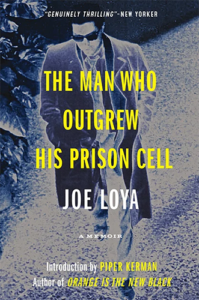
Joe Loya robbed 30 banks across California before his capture, and he’s here to walk us through the psychological architecture of a criminal mind built brick by brick through childhood trauma. On this episode, Joe (author of The Man Who Outgrew His Prison Cell: Confessions of a Bank Robber) explains how his father — a Pentecostal preacher — beat him over 100 times before he turned 15, creating a twisted internal logic where aggression felt like the only authentic response to an unjust world. He describes the strange “rapture” of his robberies, the meticulous planning that went into each score, and how seven years in solitary confinement became an unexpected crucible for self-examination. Joe also reveals the moment he finally confronted the shame and rage driving his behavior, and how he transformed that darkness into a writing career and a life of meaning. Whether you’re interested in criminal psychology, the long shadow of childhood abuse, or simply how human beings remake themselves after catastrophic choices, Joe’s journey offers a masterclass in destruction and redemption. Listen, learn, and enjoy! [Part 2 of 2 — catch up with Part 1 here!]
Please Scroll Down for Featured Resources and Transcript!
Please note that some links on this page (books, movies, music, etc.) lead to affiliate programs for which The Jordan Harbinger Show receives compensation. It’s just one of the ways we keep the lights on around here. We appreciate your support!
- Sign up for Six-Minute Networking — our free networking and relationship development mini-course — at jordanharbinger.com/course!
- Subscribe to our once-a-week Wee Bit Wiser newsletter today and start filling your Wednesdays with wisdom!
- Do you even Reddit, bro? Join us at r/JordanHarbinger!
This Episode Is Sponsored By:
- Huel: Get free shipping, a shaker, and a t-shirt with your first order at huel.com/jordan
- Shopify: 3 months @ $1/month (select plans): shopify.com/jordan
- CookUnity: 50% off first week: cookunity.com/jordan or code JORDAN
- Homes.com: Find your home: homes.com
Thanks, Joe Loya!
Click here to let Jordan know about your number one takeaway from this episode!
And if you want us to answer your questions on one of our upcoming weekly Feedback Friday episodes, drop us a line at friday@jordanharbinger.com.
Resources from This Episode:
- The Man Who Outgrew His Prison Cell: Confessions of a Bank Robber by Joe Loya | Joe Loya
- The Burden: Death & Deceit in Alliance | True Crime Clubhouse
- The Score: Bank Robber Diaries
- Website | Joe Loya
- The Rise and Fall of the Bank Robbery Capital of the World | CrimeReads
- My L.A. in Four Locations: The Bank Robbery Capital of the World | Los Angeles Review of Books
- Forensic Topology: How L.A.’s Freeways Enabled Bank Robbery | Cabinet Magazine
- He Robbed 24 Banks and Now Counsels Other Offenders. But Don’t Call His Life a Redemption Story | CNN
- Adverse Childhood Experiences (ACEs): About ACEs | CDC
- Adverse Childhood Experiences and Adult Criminality | National Institutes of Health
- Effects of Domestic Violence on Children | Office on Women’s Health
- Intergenerational Trauma | Wikipedia
- The Disaster That Helped the Nation Prepare for Future Earthquakes | U.S. Geological Survey
- The Reformation | History
- Religious Trauma Syndrome | National Institutes of Health
- MacLaren Hall Lawsuit: 12 Claim Childhood Sexual Abuse at Facility | ABC7 Los Angeles
- The Ballad of Pancho Villa | PBS American Experience
- The Legacy of Pancho Villa’s Raid on America | War on the Rocks
- Solitary Confinement: Common Misconceptions and Emerging Safe Alternatives | Vera Institute of Justice
- The Psychological Effects of Solitary Confinement | Neuroscientist
- UN Standard Minimum Rules for the Treatment of Prisoners (Nelson Mandela Rules) | United Nations
- Solitary Watch: News from a Nation in Lockdown | Solitary Watch
- Hunger of Memory: The Education of Richard Rodriguez by Richard Rodriguez | Amazon
- Richard Rodriguez | Wikipedia
- FCI Lompoc | Federal Bureau of Prisons
- Christopher Boyce | Wikipedia
- Bank Robbery Investigation | FBI
- Baby Driver | Prime Video
- Orange Is the New Black: My Year in a Women’s Prison by Piper Kerman | Amazon
- Orange Is the New Black (TV Series) | Prime Video
- Piper Kerman Official Website | Piper Kerman
- Women’s Prison Association | WPA
- Queen of the South | Prime Video
- Taken | Prime Video
- Sandy Close | Wikipedia
- Children’s Exposure to Intimate Partner Violence: Impacts and Interventions | National Institutes of Health
- Intergenerational Continuity of Intimate Partner Violence Perpetration | PMC
- Pretty Boy Floyd | Wikipedia
- Woody Guthrie’s “Pretty Boy Floyd”: Behind the Song | American Songwriter
- North Hollywood Shootout: How the 1997 Gun Battle Changed the Course of American Policing | ABC7 Los Angeles
- Psychological Effects of Bank Robbery on Victims | National Institutes of Health
- Robert Mazur: How Money Laundering Works (Part One) | The Jordan Harbinger Show
- Robert Mazur: How Money Laundering Works (Part Two) | The Jordan Harbinger Show
- Should I Relive the Drama of Childhood Trauma? (Feedback Friday) | The Jordan Harbinger Show
- Does a Reformed Abuser Deserve a Second Chance? (Feedback Friday) | The Jordan Harbinger Show
- Six-Minute Networking (Free Course) | The Jordan Harbinger Show
1265: Joe Loya | Confessions of a Bank Robber Part Two
This transcript is yet untouched by human hands. Please proceed with caution as we sort through what the robots have given us. We appreciate your patience!
Jordan Harbinger: [00:00:00] Welcome to the show. I'm Jordan Harbinger. On The Jordan Harbinger. Show, We decode the stories, secrets, and skills of the world's most fascinating people and turn their wisdom into practical advice that you can use to impact your own life and those around you. Our mission is to help you become a better informed, more critical thinker through long form conversations with a variety of amazing folks, from spies to CEOs, athletes, authors, thinkers, performers, even the occasional drug trafficker, investigative journalist, astronaut, or real life pirate.
And if you're new to the show or you wanna tell your friends about it, I suggest our episode starter packs. These are collections of our favorite episodes on topics like persuasion and negotiation, psychology, geopolitics, disinformation, social engineering, China, North Korea, crime, and cults and more.
That'll help new listeners get a taste of everything we do here on the show. Just visit Jordan harbinger.com/start or search for us in your Spotify app to get started. Now this is part two with Joe Loya. If you haven't heard part one, of course, go back and listen to that. We're going to continue his amazing story right now.
Where we left [00:01:00] off last time is that you were out on bail. Your aunt had put up her house to get you on bail, and you are just in such a place in life that you really kind of, in your words, you just didn't care about anything. It wasn't, I'm out on bail, I better go get a job at Target. It was robbing banks again, and I was just, I think most of the audience, myself included, is just like, why?
Damn it? You know,
Joe Loya: we started that whole entire story. I've never started a story with the question you asked me. How does somebody do this? Like, how do you get to do 30 banks? I try to track the movements that erode my sense of posterity. I don't believe I have a future, so there's nothing inside of me like, oh, I gotta protect my future.
I better get a job. I start better, start saving money for the future. I better get a a profession so that I can rise in the ranks in the future. None of that. Because the trauma is so intense. You're only looking at surviving the next day in front of you. You know, in fact, the, that's the way I've come to understand [00:02:00] people who mess up, mess up, mess up, mess up, mess up, mess up, mess up, mess up, mess up, is that they're only trying to survive that day to get to the next day in hopes that maybe one day they can make the jump to goodness.
So they're just surviving every day and they're making mistakes. 'cause all they need to do is get to the end of the day and then they wake up the next day and it's just day and day. And then you see people change like me, and you realize, oh, every day was impulsive. Just trying to survive. The things we're facing, our challenges outside of us.
Like challenges came to me. I could stab 'em, beat them. It wasn't the external challenges. It was all the challenges inside of us that a lot of us don't have language to process. I told you when I had grief as a child, what did they tell me? Don't cry. Don't
Jordan Harbinger: cry. Yeah,
Joe Loya: because your mom's in heaven. Which compounded my pain, right?
Because now I'm feeling guilty. All that's internal. I told you one of the worst things that happened to my childhood had nothing to do with physical beatings. It was what I heard and how my body metabolized that thing my dad said to [00:03:00] my brother, what is that? It's all internal. Our internal compass is so messed up.
It's like looking at a compass that's just spinning. There's no true north, no like it. There's no nothing. It's just spinning outta control and nobody can help us figure out how to grab a hold of this trauma, place it down, ground it, and start working on it. What's given to us instead is language of you're a sinner, you're a bad person, you're a super predator, you're all that stuff, right?
SLE pad narcissist, like, but we're just trying to get by. We're trying to do it now. Over time, we can become habituated to the underworld, to the other side of taboo, to the grand transgressive life, and it's hard to get out of it once you've allowed your trauma to get you in there and swim in it. It was challenging for me to get out of it and then, you know, then you're a mess, right?
Then it's like you can't play well with others. If you let me out, I'm gonna hurt more people and go back in kind of thing. And that's where I kind of was at that time. I was at the place where, no sense of future, no jaw. I don't wanna jaw, [00:04:00]
Jordan Harbinger: you had an interesting idea as well, which was teach another guy to rob banks.
So what was the plan here? Like teach him to rob banks and you take a cut and there's less risk for you obviously it was like,
Joe Loya: I still wanna make bank robbery money, but the FBI have my photo and they know my mo, like if I go rob a bank, they're gonna look at a photo and go like, wait, we just locked this guy up a month ago.
Yeah. And he's out. That's the Beirut Bandit. Right. And I, and I wasn't a disguised kind of guy, I was just in there, let's get it, let's get the hell out kind of thing. So what I thought was, I knew this person and this person was um, a little older than me when I was younger. I thought they were kind of a tough person and I thought, well, lemme recoup this tough person.
But by all measures. That I now measure toughness. This person had no toughness. Yeah. When I was younger, I looked up to them, but they didn't have what I had. They didn't have gravel in their cr as they say. Okay. You know, they didn't have, they didn't have the minerals for, so I [00:05:00] take 'em out and I say, okay, here's what we're gonna do.
You gotta go in there, you gotta say these words. And they're basically, it was my mo The person resembled me a little bit as well, but the person was four inches shorter than me. What's happening is I go to this guy and I say, Hey, um, you're gonna run in there and you're going to say these words and they're gonna give you the money and, you know, look menacing when you say 'em.
And, um, he does, he goes in the first time, he comes right out and I'm parked far away, but I could see him. So I, I pull in on an alley so no one could see him jump into my car. And he jumps into my car. He ran to my car. Now I'm like all pumped up, like, oh shit, they're coming after us. Let's go. And I take off.
And, um, I'm excited, just like I'm concentrating on I'm, I'm a getaway driver at that point. Like, who's coming? What's going on? And then finally when it settles down, I realized we got away. I turned to him and say, Hey man, so how much did you get? And he said, I didn't get anything. They told me no. I was like, I was
Jordan Harbinger: like, what the, so he's also an [00:06:00] idiot, aside from being not tough, he's a moron.
Joe Loya: Like I said, he had no bon, he, he wasn't frightening. Wow. He didn't scare anybody. He had no menace. He didn't have the rage, which is what always got when I went in there, I was, I was raging. I was prepared to like, to injure myself and injure others, that kind of thing, right? So I get so upset. It was a waste of time.
It, we put ourselves at risk. So I pull over and I scold them and I say, here's what you need to, here's how you need to think about it. And I said, those people went up to your house last night where you were asleep. They went upstairs, they grabbed your pants. While you were sleeping, they took 'em out, they grabbed your wallet, they took all your money, your money's in that bank.
All moral authority accrues to you now. Yeah. You are in a position to go get your money. They took your money. That's how you have to go in there to think about it. So I sent him in the next time thinking that, okay, I gave him the hype, right? Yeah. I gave him the game. So now it's one of these malls where like there's a big parking lot and then there's a other parking [00:07:00] lot, uh, beyond it.
There's a, a big place in Orange County and as soon as I see him coming out, I'm gonna go across this big pool of void and I'm gonna wait for him outta street for him to get in my car. 'cause I can drive there fast and he can run there. I see him step out of the bank and as soon as he steps there, there's one of those doors that when you open one, the other one kind of moves too.
You know, 'cause it it the wind or the air.
Jordan Harbinger: I see.
Joe Loya: So he opens the air, he opens one door, and the other goes and there's this Eddie of air. He's holding the money like this and just, it just goes all up in the air. Oh my
Jordan Harbinger: gosh.
Joe Loya: And then everyone inside could see, oh, this is a knucklehead man. Yeah. We're not supposed to be afraid of this guy.
He's grabbing, he gets as much as he can and it's like the Benny Hill skit where there's one guy at the, and the crowd falling, right? Yeah. It is so like comical. And I'm over there now parked and waiting for him, and he comes running across that boulevard, almost getting hit by cars. And I'm looking in my mirror and I'm like, holy shit.
And the other people, they don't wanna cross the boulevard. They stay there, they start pointing at him. [00:08:00] He robbed a bank and all this traffic, oh no, that's finally stopping at a light. A truck turns left onto the street where I am. They see him, I see the car take off, and they only see one person in the car, the back of my head because he's so short.
He's in the front seat, they can't see him. So they think the guy who's driving this car is the guy who just robbed it. They chase me, but I'm the RX seven. I take off. They can't read my license plate, they don't do anything. But I'm going so fast. I'm like a hundred in a, um, you know, residential. Oh man. And I come up to a dip and I cannot slow down in time.
Oh no. I hit that dip and I, I go flying and when I land, I know I've just broken my, my oil pan. I limp about a block and a half away, the lights are going on flashing. I drop him off and I say, get home. And he goes in on AutoZone and he hangs out there talking to a guy just, you know, bullshitting guy to guy man to man for like two and a half hours.
And now there's a dragging it out looking for him, but he's [00:09:00] just in there chilling. And I go and park the car and I run away and I eventually, I get away just by running through the neighborhood and getting into, you know, have my brother come and get me in Orange County. But the point is. When we finally get home, I said, how much did you get?
And he said, $900. Ugh. And I was like, you are worthless, man.
Jordan Harbinger: Yeah.
Joe Loya: That was my experience of trying to get somebody and so on. Bail. I robbed the next three. I was just like, I don't, I don't need the hassle.
Jordan Harbinger: You want something done. Right. Gotta do it yourself. That's what they said. Right. Did you have any close calls with getting caught?
There was a time where your car overheated. This is kind of a funny story, and I I thought you were done for it at this point.
Joe Loya: There's a couple times, I mean, one time the money exploded,
Jordan Harbinger: like a D pack or whatever. Yeah. The
Joe Loya: bag exploded. D pack exploded in my, my bag in the middle of the street. And when I went to pick it up and there was a big hole in it, a big red plume of smoke coming out of it.
And when I go to pick it up there, there's also tear gas in it. Oh. And I lean in a pope and I go, cat like reflexes. Right. So I pull back, but not before it's in [00:10:00] my eyes. Right. And now I'm like, blinking, blinking, blinking, blinking, blinking, trying to grab it, go into my car. I'm running through a park.
Holding a bag with a big old red plume. Mm-hmm. Smoke coming out of it. My car was parked away. I think I mentioned, I always parked far away. Yeah. Bankers walked out. They could look sideways. They think there was a getaway car, but I was far away. They probably saw me though because it's just follow the smoke trail.
I get to my car, open my trunk, I throw it in the, in a sports bag and I zip it up and so no, no more smoke. But I drive away and I got away. I barely got away because I, my eyes were like a little bit more tear gas than I would've been done. So there's that time. Another time was, I robbed four banks in, in San Diego in one day.
It sounds like a lot, but it was actually almost like three, because I robbed one bank and I was so angry with the amount of money I got, which ended up being like a thousand, and it was like pulling teeth to get that thousand. So I walked in the next bank, right next door and robbed it. Even though the police were coming, I didn't care.
I was like so angry. [00:11:00] I robbed it and I was able to get away and that was the first two. Knocked him out 10 minutes. I was done. Was able to, you know, bank, two banks first thing in the morning. That's why it was easy to route four on the way out of San Diego. Have you driven up from San Diego on the five?
Sure. Yeah. Okay. So on the way up there's a, another border where they stop you and there's also a big, a big stretch of land where on the right hand side, coming North Camp Pendleton, the marine base. I'm there driving up out of San Diego and all of a sudden I hit like the freeway stopped. We are stopped.
We're parking lot, we're not moving. Slowly, we're stopped. And I'm in my uncle's car was A BMW. My car starts overheat, like I didn't realize at the time, but the fan in that car, if you're not driving it, the fan just stops. It was overheating. So I pull over to the side of the road, I'm able to get over to the side of the road off and I can see in my rear view mirror that a cop is coming highway patrol way back there also on that side lane.
Right. So I [00:12:00] try to move ahead so I can get out, you know, I'm like this, I try to move ahead so I can like, give him room to go by and when he pulls up, he scolds me. I'd take you in right now if there wasn't a, a cop injured up front, you're not supposed to be driving. And I said, I'm not driving man. My car's overheated.
I don't give a fuck. And he just takes off Uhhuh. And I was like, I got over $50,000 in my, in my trunk. Yeah. And a bunch of chain of clothes
Jordan Harbinger: and maybe a die pack in there that you don't know about.
Joe Loya: I might maybe, but no, this is another time. It wasn't that time. So, um, but the fact is that I have a lot of money.
I'm gaining away now. I'm there and I'm thinking these people may have stopped for me. This might be for me. So remember I got arrested at the border of going to Mexico 'cause they were looking for stolen cars. So I'm thinking this might be that kind of thing again. Right. I get outta the car and I start walking backwards.
'cause I wanna see if I can get, like, find one of those call boxes so I could see if I could get a truck to come on and help me. You know what [00:13:00] all the call boxes have a big iron mesh over them and a Big X and they're like, oh, these guys are shrewd. They don't want me to get outta my car and go and try and get somebody else to drive it away.
That's
Jordan Harbinger: smart. That would've been a good plan.
Joe Loya: Yeah. So I'm thinking, yeah, I'm thinking they're very clever. So I have to walk forward and when I walk forward all the call boxes, even moving forward another mile to an off ramp, they're all blocked too. So I I, I start walking on the off ramp thinking I'm gonna go underneath the off ramp and go back, walk back or hitch a ride.
Going back. I go to the bottom of the off ramp and there's a cop there directing everybody into, um, camp Pendleton. And apparently what happened, they closed the freeway and now five lanes of traffic were having to like move outta one off ramp. So that, that's why the traffic was so intense there, a mile at least of this parking lot traffic.
So I go down the bottom, it's the cop who would stop me. I said, I told you my car was a wreck, man. I need to, is there a gas station in here? He says, no, you gotta get on the freeway and go back the other way. I said, thanks. So I go under the freeway, [00:14:00] I start going up the off ramp and I hear, whoop, and I turned and there's a highway patrol with two guys and they pull up next to me.
Where you going? I said, your partner back there. My car overheating. Your partner told me I have to walk back this way. And they're like, get in. And I'm like, okay, I'll get in. And I get in the backseat and I'm bouncing and they're like, oh, I've never been in the back of a cop car before. And I'm playing it off.
I'm 20, I'm 26 or 20, 27. I think I'm wearing, um, like khaki shorts, top siders. I'm wearing A-U-C-L-A tank top baseball cap. I don't look like a bank robber. I look like I just got outta college. I look like I could be a college, you know, like a grad student. They're like, well, where, what are you doing? Where are you?
Uh, what are you doing down here? Or Where are you going? I said, oh, you know, uh, my car broke down. I gotta call my uncle to come and get me. I said, but I was down here. I said, what were you doing down here? I said, uh, I met this woman at USC and we hit it off. I came down here. I spent a couple days with her, but you know, she just got [00:15:00] crazy, man.
You know who it is. And so now I'm using this as I'm appealing to the misogynist in the right. Geez. I'm like, let's be buddies. Now. I'm not a guy to be worried about. We're all the same kind of male bullshit, right? We're we're all jackasses. And they're like, they're like, yeah, yeah, of course. And all of a sudden there's comradery there.
Yeah.
Jordan Harbinger: Geez,
Joe Loya: I'm just a guy who's down here and don't we know how women are like that kind of asshole, right?
Jordan Harbinger: Yeah.
Joe Loya: And so they go along with it and then, uh, they say, Hey, so what, why is it all locked down? They said, well, and there was a shootout and, and one of our guys got crashed. And the bad guy. He got shot and he is dead.
And I said, oh man, that's terrible. What, how's your guy doing? How's your board doing? And they're like, well, he is gonna make it. He is in the hospital now. I said, does he have a family? And I show great compassion. I just like, I'm caring about the cops. You know, like I'm a guy who appreciate the cops doing the work for us, and I wanna let 'em know I'm appreciative.
And, and they're buying it, man. They're just totally buying it. Now remember, I got a fanny pack around my waist that has about $40,000. It was all I could fit in there.
Jordan Harbinger: Wow.
Joe Loya: And I [00:16:00] just robbed four banks there in the city. So I see a rest stop coming. I say, you know what, guys? Just drop me off here. I said, sure, we could take you to gas and no, no, no.
I'm going to go in here. There's a taco truck there. I'm gonna gimme some to eat. I'll call my uncle. Oh, have him pick me up. I sound almost a little spoiled. Like, I'm gonna make my uncle do all the work. I'm not gonna, you know, like I'm letting them feel like I'm just a guy. There's nothing dangerous about me.
There's none. None of that. They dropped me off and, and I tried to get, I said, Hey, there's no way to get out back here, you know, back here. I pretend like never been in a police car before. Back to a cop car that doesn't have any like handles, right? And they're like, oh yeah, we got a bunch of bad guy. We don't want him getting out.
Let me get you out. That's funny. And so let me out. And I come to the front window and I'm like, Hey man, thanks guys. I really appreciate it. And they're like, we could drive you. You sure? I'm like, nah man, I got this. Thanks. And I was just as super friendly as you can get. And they loved me. Jeez. And they hit it up and they go, I call my uncle.
I said, what the hell? What the hell's going on, man? He's like, oh yeah, the fan, whatever. He's the one that told about the fan. I wait till all the traffic dies down. I get over [00:17:00] there eventually and I just drive away. But when it was interesting to me about this story, the next day, that night, I get a call from a friend that I'd been in San Diego, um, county jail with when I got arrested.
First time at the Mexican border, right? He called you over, Hey Joe, you know what it says? I said, yeah. And he says, um. Were you doing any work down here today? I said, yeah, why? And he says, you're on Crime Stoppers. And they said that, they said, you route four banks, and they said that they think you're Indian or Pakistani and they think you live in Tijuana.
I said, oh, okay. Thanks for the heads up. Now I know I was a crime stoppers, which means in the morning when these guys showed up to work. Together and there's a pictures of me like, if you guys see this guy look out for it. And I wonder if they looked at each other and like, yeah, we're not gonna say nothing.
We had him. Yeah. We're not saying in the back of our stop. Exactly. Or did they say, oh yeah, we had him in the back of our car. We know he is going to LA or like, whatever. Right. What do you think happened? We took him off
Jordan Harbinger: the crime scene and drove him to a rest stop and then let him go after having him in the bag, what do you
Joe Loya: think they did?
Did they, did [00:18:00] they speak up or No way? Did they like No way. No way.
Jordan Harbinger: They looked at each other and they were like, wasn't him right? No, no, no, no. He was, uh, yeah. Wasn't, he was too nice anyway. Yeah. They just were like, nah, no, nah. Like there's no chance that they brought that up to anybody. He possibly not even each other.
Where do you hide the cash after you rob a bank? Because you can't just put it into another bank, but you have a lot of money. I mean, are you doing that breaking bad thing where you put a big pile of money and you lay on it? I mean, money's pretty gross. Actually,
Joe Loya: I did. I did one time. You did? Okay. I did one time, so, yeah, yeah, yeah.
I did actually. And you're, that's where that was, that was a fascinating time. 'cause I just laid the money on the bad. You know, it wasn't, not a lot, it was maybe at the time it was $70,000 or something in cash, but I laid it on the bed and when I lay on it, all of a sudden, man, I smell like there was shit on the bottom of my shoes.
I get up and I'm like, where is that smell? And I look at my shoes, there's nothing there. And then I look at all the money and I lean forward. I'm like, oh man, this money stinks. And you don't think of money stinky, but everyone's greasy paws around. And that, that money stunk. When I was on it, I, I [00:19:00] realized, oh, money stinks.
Yeah. Especially, you know, you have that much money out. Uh, that was an interesting observation to make about money. Really stinks when you have a lot of it.
Jordan Harbinger: Yeah. It's kind of gross. Eventually you get caught for real. Lead us through how you get caught, but then since you had the double, they got confused and they couldn't pin it on you.
Joe Loya: Okay. So when that guy robs that bank, the guy you train, the dummy, that guy I tutored, right? Right. When he robbed, he used my mo. We have a bomb. I have a gun. Gimme the bunny now. Yeah. So when he robbed those two banks. The FBI gets notified. There's a guy out there who robbed, here's his mo, it goes over the thing, whatever, and they're like, oh, that sounds like Joe Loya.
So those two guys who are investigating the FBI, they go to the bank and they have a six pack of photos. One of them's me and they show it to two women, and two women point at me and say, this is the guy who robbed us right now. I wasn't in the bank obviously. So they go and they rescind my bail. And the FBI agent, uh, [00:20:00] special agent Keith Cordes, who we befriended each other much later, but Keith Cordes, he calls my dad and said, Hey man, you're sorry to say, but your son started robbing again.
And my dad's on, and he says he's considered armed and dangerous. So if you want to help him, tell him to turn himself in because I probably won't be the one to arrest him. And they'll think he's armed and dangerous. He could die. He can get killed. So my dad gets a hold of me, or I call my dad, what's up dad?
And he says, turn yourself in. They know you robbed that bank. So I wasn't in any bank today, and he says, they know you robbed it. They have it positively identified. I said, dad, I swore on Mom's grave. I was not there. Now Mom's grave is sacred to me. And so when I said that, he was like, oh, okay, I'll tell him.
He calls the FBI back and he says, listen, my sons sworn his mother's grave, which is, you know, I believe him. He, you know, it wasn't in that bank. So he, he said, have Joe call me. So I called special Agent Cordes. I said, dude, I wasn't in that bank. You can't rescind my bail. I, it wasn't me. [00:21:00] He said, all right, I'm gonna go the next day.
I'll go tomorrow and I'll check. And the way they could check is he gets the tape and the person who was standing at the counter, the counter will come to a certain place on me and it'll be four inches taller on him. So he goes the next day, sure enough,
Jordan Harbinger: yeah,
Joe Loya: I have a double, because those two women were just robbed and they both identified me, which means, mm-hmm.
Fresh identification, positive identification was totally wrong. Which means all the identifications. When, when I got arrested, they went back to people who had been arrested 18 months before, you know, uh, who've been robbed 18 months before, you know, 14 months before. Yeah, 10 months before eight months.
All of those are suspect now because I have a double. So when he, when I call him, he says, Joe, listen very carefully. Go to your attorney and tell them that you have a double, you have an official double. Right? And so I do, and my attorney goes to the DA and I get arrested. In the meantime, they go to the i, I get arrested soon after three days later or something, [00:22:00] and my attorney goes to the DA and says He has a double.
All those ones are suspect. And not only that, I had time cards at my job saying I was working that day. Positive ID trumps time cards, but when all those positive IDs just collapse, my time cards become boss. And so I have an alibi now where I was, but except for three banks, I didn't have an alibi for them.
So they said, well, haven't plead guilty to three banks. We'll give him eight years or something like that and he'll do seven. And I was looking at 36 or something like that, 36 years. So I was like, where do I sign? You know, like I got love. And that helped me, that, that guy who resembled me, it actually helped me.
So that, that's why I, I robbed 30 banks and the, you know, the FBI has been on TV on the show. I almost got away with them. They said they actually suspect me of 30 or 40. That's their count. I know from my own count it was 30. So
Jordan Harbinger: that guy, not only he, so he only stole 900 bucks, but he saved you like 29 years on your sentence.
He [00:23:00] actually had the biggest take of all that idiot.
Joe Loya: He ended up doing me good, but you know, I ended up doing good by choosing him and getting him in that spot.
Jordan Harbinger: You can rationalize almost anything if you need it badly enough. Speaking of which time, for some ads, we'll be right back. This episode is sponsored in part by Hue.
One of the hardest parts about hitting my protein goal is not actually the protein, it's doing it without accidentally eating a million calories of other things. Because you start the day with good intentions and then you're like, cool. I've had plenty of protein and also an entire day's worth of calories before noon.
That's why I use and recommend HU'S High Protein starter kit, the Black Edition, ready to Drink, plus the Black Edition powder because it makes protein. There's so many jokes. I'm just gonna get canceled for making it makes protein consistency way easier without turning every meal into a calorie bum. On chaotic days, grab a black edition ready to drink.
It's a complete meal with 35 grams of protein, 27 essential vitamins and minerals. It's gluten-free, it has no artificial sweeteners, colors, or flavors. It's filling. It's easy. You guys know where my head is at right now. I just know it. And on Days Home I use the Black [00:24:00] Edition powder, which is great because it's customizable.
I can keep it simple at ice, whatever. And it's still a high protein complete meal that fits my goals. Plus it comes out to under five bucks per meal.
Jen Harbinger: Get Hu's full high protein starter kit online with our code JHS for 20% off at huel.com/jhs. That's HUE l.com/jhs. New customers only. Thank you to Huel for partnering and supporting our show.
Jordan Harbinger: This episode is also sponsored by Shopify. If you've been sitting on a business idea for a while, I'm gonna call you out lovingly. You don't need more planning, you need momentum. Don't be that guy that fails because they never launched. And January is where you got that fresh start energy to finally change the script.
Don't let February show up with the same old, maybe someday story. And the easiest way to make it real is to start with Shopify. Shopify gives you everything you need to sell online and in person. And millions of entrepreneurs have already made this leap from huge household names to first time business owners.
Just getting started. You can build your store fast with hundreds of beautiful templates you can customize to match your brand. And Shopify's built in AI tools help you write product descriptions and headlines and even edit [00:25:00] product photos, which removes a ton of the friction that keeps people stuck.
Marketing is built into email and social campaigns to reach customers wherever they scroll. And as you grow, Shopify grows with you more orders, new markets, all from the same dashboard.
Jen Harbinger: In 2026, stop waiting and start selling with Shopify. Sign up for your $1 per month trial and start selling today@shopify.com slash Jordan.
Go to shopify.com/jordan. That's shopify.com/jordan. Hear your first this new year with Shopify. Buy your side.
Jordan Harbinger: Don't forget about our Six Minute Networking course. It is free. It is non cringe. It is down to earth. It'll make you a better connector, a better colleague, a better friend, a better peer. It's all about relationship building in six minutes a day is really all it takes.
Many of the guests on the show subscribe and contribute to the course. Come on and join us. You'll be in Smart Company Where you belong, the course is free. There's no shenanigans at Six Minute Networking dot com. Now back to Joe Loya. Prison. Sounded like chaos. I mean what you wrote about or what you talked [00:26:00] about in the podcast.
You think like, oh, prison is boring or prison isn't like tv. It sure seemed like it was almost like tv. Some of the stuff you described, the chaos that was going on, you mentioned that I think you either saw or at least heard a guy getting lit on fire in his cell. I mean, what, what the hell is that? What's that all about?
Joe Loya: Yeah, that's a crazy place. I'm watching a show right now called The Night of, it's on HBO. It's about a guy who's innocent and, but he gets pulled up into the system for a murder that he didn't commit and he starts going through being a fish in prison. He gets confronted with all these things that he's totally unaware of all the entries.
What's a
Jordan Harbinger: phish?
Joe Loya: Uh, a first termer, like first time man. He's just a little guy and they're sharks. This vicious. I see. Like he's just, he is, he as I call him a guppy, right? He's just, just knew like I was when I went in, I didn't know it was a what, fortunately I had some experience of doing time before a couple guys there knew who I was.
They knew I had a little reputation at the person I was before because of violence. I had committed and earned respect for that so [00:27:00] I can show up with little something. Not only that, I happen to be fortunate because one of the most renowned neighborhoods in California prison system is the neighborhood where I was born in it marvia in, uh, east la.
That's just by chance. I was born in like a legendary place in the lore of prison gangs and prison violence, that kind thing. I see. So I'm able to say I'm from and goes, oh, who do you know? And I'll just tell 'em whatever. But I had some access to some resources that when I first went to Lompoc that that other guys didn't have who just going for the first time, but.
This show that I'm talking about was, I'm with my girlfriend. I'm, I'm realizing there's a lot of things that are going on that actually happen. They've accelerated it for the purpose of the, the, the show. But there's a lot of things you have to confront that are scary, that are dangerous. And if you're not savvy, they can come at you.
And it was, it was very wild. The, the fire one was, I worked in the Sign [00:28:00] factory and in the sign factory there's a place where all the flammable stuff is. And I would, they would open this big door and me and another guy from the order, we'd go inside and they'd close and lock it up. And the only person allowed to come in was a guard.
And another inmate, they'd come with a cart and they would give us a list of the, the paints and the acetone or whatever they needed, and we would give it to them. And we were locked in there. They'd lock us in again, and we just had to keep inventory of the stuff. And then when they came in, we would give 'em the stuff, but we would always smuggle stuff out where we were, we were smugglers.
We would take it out and we would sell it. He would smuggle our acetone. Acetone is what you could use. You put a spray bottle, you could set someone on fire with it, right? What happened one night, it was late at night, a guy was in the TV room. He gets outta the TV room and the guard says, okay, stand in front of your cell, and he has a spray bottle of acetone in it.
He goes down the first floor, the guard goes to the third floor to start letting guys into their cells for the TV room, and, and most of the guys are in their cells [00:29:00] going to sleep. This is 11 o'clock at night and 12 o'clock at night, whatever. And these guys, you're allowed to stay in the TV room on the weekend for two hours.
And every hour a guard comes there and says, Hey, who wants to get out now? And then the next hour, okay, everyone get up. And it was one of those moves it late at night and there's Native Americans sleeping in a cell. This guy who has the water bottle, there's a white guy, and he goes to the cell and he starts squirting in the room, on the floor, on the guy's blanket.
Just he starts squirting inside and then he lights it on fire. He goes to the next cell and he is doing the same thing. Lighting on fire is this guy's friend lighting and lighting on fire. But at this point, that guy is starting to hear this guy scream on fire in the first cell. So he gets up and he's able to kind of like put a pillow in it.
He, so that guy doesn't have a chance to get him on fire. The only guy on fire is in the first cell and he's on fire. He has long hair and everything. Now I'm hearing screaming. I go to my window and I could see the, the unit right across the, a little patch of grass and one cell is lit [00:30:00] up on fire and that's the guy who's screaming, trying to put it out.
It was terrible. And that was the worst part. When the guards come, they all rush to that unit. 'cause the guard hits his panic button. All the guards come, they grab the guy who had lit it on fire. They don't know who he is. He's just standing out there because the guard had to come down to put him in a cell.
They put him against the wall and they say, here they come with a fire extinguisher. Sh. And they pull the guy out and he's just sitting there kind of. They've put him out of fire and he's laying there and they're waiting for the nurses to come. And the guy who lit him on fire, who's sitting across the tier, just waiting in the, all the hab, he walks over there, he grabs a fire extinguisher right there, and he starts beating the guy.
He just set on fire. Wow. He starts beating him, the guards tackling him. So the final indignity wasn't just a fire, it was that, you know, he got beat down with a fire extinguisher. He lived, but man,
Jordan Harbinger: it's just, these people are like animals in there. Some of these people,
Joe Loya: yeah.
Jordan Harbinger: That's really like, the brutality is just, well, we're animals,
Joe Loya: we're [00:31:00] animals out here too.
But, um, we're just, we have logic and we try to like hide all our animal instincts, but like, polite
Jordan Harbinger: society, like for me, I'm just like, wow, that level of brutality is actually insane.
Joe Loya: Yeah.
Jordan Harbinger: You get in your own fight, you have almost like a spiritual experience in solitary confinement. Tell me about that.
Joe Loya: Yeah, so, you know, I was, I was, I, for the first half of it, I was a criminal. I was committing crimes, I was doing everything I could to, you know. To make money in there and doing all the hustles that are against the law. But I get pulled up, I get swept up in a homicide investigation with six other Mexican guy, five other Mexican guys, and they keep us there for two years before they say we didn't have anything to do with it.
Jordan Harbinger: Because you're in prison for seven years at this point. Yeah.
Joe Loya: Yeah. So this is the middle of my term. Yeah, I'm right in the middle of my term and while I'm in there first, sure. I'm doing everything I can to stay sane. I'm doing exercises, I'm doing concentration games. I'm trying to like, 'cause you're locked in a cell the size of a parking stall for, you know, 24 hours a day, 23 hours some days.
Oh my god. You know, they let you out to go to walk in a bigger cell for rec five times a week and then [00:32:00] three showers a week. So you know, you're locked in there for a long time. I do a lot of reading, I do this stuff, but my mind slowly started to fragment and um, I started hearing voices. I had an hallucination that there's a little bald boy in my cell.
I cracked. I see this bald boy in my cell and I'm like, oh no. I've seen guys crack in solitary confinement. They do crazy things. And I was like, oh no, I can't tell the difference between reality and fantasy now. So I'm in that realm. There was a guy once he came up and he went in Bobby, and when he came up, he put red pencil on his cheeks.
He tucked his t-shirt in to make it look like a halter top. He rolled his boxes up to make 'em look like panties. And he came out, Sally,
Jordan Harbinger: oh my gosh.
Joe Loya: There was another guy just rubbed feces all over himself when he went crazy and just, and they had to try and get 'em out and nobody wanted to go in there to drag him out.
People go crazy, they do crazy things in there and, and uh, I was thinking, oh no, I'm on that spectrum. Yeah. Like I know that this isn't cool. I [00:33:00] just saw somebody that feels as real as anything I've, as if I, you know, in the visiting room, you know, and as I'm lying there thinking I'm a wreck within the day, I realized, oh, you know, when I was a kid, a 7-year-old bald kid, I knew when I was seven and he was, um.
He drove his, rode his bike in the neighborhood and he, um, he had leukemia and he's riding. We become friends and he said, Hey, can you come to my house? I got a little club in my garage and I asked my mom, she calls his mom and we go over there, we're best friends. Now I, it's just two blocks away. I ride my bike over there and hit his garage.
The parents had set up a little clubhouse in the back, so we go in there and he grabs his hair and he takes it off and he puts it on the, on the thing. It's got all these loops of tape in there. I'm like, what's going on? He goes, oh, I'm sick. That's nothing. And because when he would ride his bike coming in the neighborhood, he had his hand on his head and he was riding his bike and the little hair was flapping up, you know?
Oh yeah. So I knew there's something weird with his hair. Uhhuh, you know, he had leukemia and three or four months later, he died on the way to church. My dad told me my friend died and he is [00:34:00] in heaven now riding his bike. And so I'm thinking, oh, I knew a bald kid and my psyche pulled up this bald kid.
Outta nowhere. I'm visited there and it's so humbling, this experience of going mad, of having this hallucination. I know how to perform prison maleness. I know how to perform, don't mess with me. Like I've done violence already and, and now I have this homicide investigation that I survive. And when I come out, there's something that happens to you when you're investigative for a homicide and you don't get the case, right?
What men in prison think is, oh my God, you beat a homicide, right? You're a killer. Yeah. It's easier for them to think that because it's safer. You don't know if I killed someone I may have though, and so you don't wanna bother me. And what that did is allowed me distance from people because now I've been riding the last year in prison trying to save myself.
I'm writing, I'm thinking of stuff. I'm writing stories. The first one story I wrote that ended up in the memoir was about this [00:35:00] Baldhead. Right?
Jordan Harbinger: Yeah.
Joe Loya: And so I'm writing all these stories from my past, and I need time in style to keep writing and investigating who I am. The great irony of my second half of doing time was I had to periodically really pretend like I was ready to stab someone or whatever, and commit violence on people so that I, I had to project so that you could get some peace and quiet, I'll hurt you so that I could be in myself becoming a more sensitive man.
That's hilarious. Writing to investigate myself, you know, that's, that's, I'm having
Jordan Harbinger: a spiritual awakening. Get away from me or I'll stab you in the face with a pen. Yeah, I'll stab you. I'm having a compassionate awakening, and if you disturb me, I will s shive you with a sharp toothbrush. Yeah. This is crazy.
So what was scarier than going to prison or having to take a cold, honest look at yourself?
Joe Loya: Cold, honest look, because all the crimes I did and all the violence I did, and starting with my dad 16, it was like that. I'm wired for that. I'm made for that. I've already committed so much violence that I know I'm fearless.
[00:36:00] I've robbed 30, but I walked in there, you know, ready to die. I'm a fearless man. But there's a reason why I was doing this external stuff. 'cause I didn't want to go inside and deal with the internal stuff. I was afraid of going in there. So what I realized when I started investigating myself was, man, this is hard.
This is scary. I was gonna have to change. I was gonna have to confront all these griefs that are, that are actually, those are the animating force to do what I'm doing, to live the way I'm living. I need this rage to survive here, to survive in the underworld. I need the rage. So all of a sudden I'm thinking about dismantling my rage and confronting my grief, right?
To take away the power of the rage. And I'm like, I'm gonna be Nate. I'm like, I might as well be like melting my armor because that's what I, and the armor is what I need to survive in here. So it was scary. Like it was super scary. And then of course, you know, there's all the grief that comes up that I'd shut down and the conscience, I had a conscience now that was a baby conscience and I was [00:37:00] so distraught to think about all the harm that I had caused.
I opened up a little bit of my conscience and everything was waiting and just,
Jordan Harbinger: yeah,
Joe Loya: all the bad that I've, I'd kind of pushed away and there was a lot of bad and it was a lot of regret. It was a lot of shame. So it was heavy on me. It was super heavy. I wasn't sure how I was gonna cope with it. So the writing was super helpful that way.
Jordan Harbinger: Did you start to understand your father a little bit more, being in that position in solitary and started having that, I guess awakening from the sound of it?
Joe Loya: Yeah. You know, it was this interesting thing where, you know, I was raised Protestant, Christian, evangelical, you know, they always tell you, you gotta forgive people.
I got also got this little Buddhist tract in solitary and I started doing this correspondence course with, you know, sort of eastern ways of looking at the world. And what was interesting about that was that I had been forgiving my dad for years. It never took. In fact, when I came outta prison, there's a lot of people who've been forgiving their dads and they'd never, it doesn't stay.
It's hard to do that. And I figured out, the reason it was hard for me was I was always [00:38:00] thinking, I'm going to forgive my dad. Yeah. And at the beginning of that is ego. It's me. And what it started sounding like in my ear was I'm so magnanimous, which is already ego, right? I'm so magnanimous that I'm gonna bestow something on this lower person so that we can, I can elevate him so that we're, we're now fine, we're good now.
But in order to make that happen, I have to bestow forgiveness on him. And to me, that power dynamic does not feel, that didn't feel cool. It didn't feel, I was like, no wonder it doesn't work. It always starts with I. And so I read about compassion in a way that blew my mind, because what Compassionate told me to do was, you don't forgive 'em.
You accept them for who they are. The reason they are who they are is because look at their childhood, right? If you look at my dad's childhood, his father brutalized them. He was so bad that sometimes he would make my dad sleep in the chicken coop outside. I know this because his brothers and sisters told me he was [00:39:00] raised in such a violent home that he watched his mother get brutalized all the time, and he had to process that and the grief of that, right?
So I looked at my dad and I started seeing that the guy who was in our home doing what he did, he wasn't a monster. Was he behaving Monstrously? Yes. But he wasn't a monster. He was a little boy who had been beaten and beaten and he was like a tree that you keep beating. It grows crooked. More importantly, it was like a little unelected cub grown a grizzly size.
He didn't get love. He got violence. What's he gonna do? He's gonna grow up and be this angry bear. And when I started looking at my dad's formation, I said, I don't need to forgive him. I just accept that he is who he is because this is what happened to him. And the biggest thing in me was I realized that we shared a grief that animated our violence as well.
He was totally in pain by the death of my mother. It fractured him and it destroyed me too. And so when I was able to [00:40:00] look like, oh, our violence is underwritten in many ways, by the death of my mother, the absence of my mother, and then that made solidarity between us. It's like I found the hidden likeness before.
It was just, oh, you're a monster and I'm, I was brutalized by you. Now it's like, no, we share the same grief. And more importantly, our anger is trying to disguise that wound. So my dad has a wound, I have the wound, we have all these wounds from our childhood we're the same. And when I had compassion for him, there was no need to forgive him at all.
I see. And so when I tell people that, they say, have you forgiven me? Your death? No, never. I have compassion for him. And another way to have compassion, uh, compassionate way to look at it was. He may have socked me, he may have choked me, he may have done all those things, Bebe with a bat. But I don't take it personal.
And people are like, how can you not take it personal? It literally happened on your person. And I get it because I didn't understand it before either. When people would say that, I was like, it happened to your person. How do you not take it personally and the way you don't take it [00:41:00] personally? And the way that helped me move away from, oh my God, he did all this thing to me, was that if you had lined up a hundred sons, they were all gonna get beat because it wasn't about the sons.
It was about what was in him. And he didn't know how to deal with stress. And he was always gonna beat somebody. And then that way I was like, it's not about me. And so I don't look at it like you did this to me. I look at it as you did this to yourself. Your conscience now has to deal with what you did to your boys.
Your wife told you, take care of my boys before she died. And the courts took us away. 'cause you failed at taking care of your kids. You have to live with that shame. You have to live with that grant. I let it go. I have compassion for you. It didn't happen to me. I said this at, um, at a conference once, sun Valley Writers Conference, and there's a famous writer there named Frank McCort who wrote a book called Angela's Ashes.
I don't know if you've ever heard of it. Yeah. Or read it. One of the greatest bestselling memoirs of all time. And Frank McCort came up to me afterwards and he said, you know, I've never been able to [00:42:00] verbalize that. 'cause the book Angela's Ashes was how his dad was such a drunk and spending all the money and beating the kids and beating his wife was that some of the kids died because they didn't have food.
And his dad was terrible in that regard. But Frank said, I've been trying to articulate this, but you articulated it so well because I don't feel like I need to forgive my dad. And nobody understands that. He says, I really appreciate that. Behind him was a guy named Brayton Braden Buck, who was a great poet from South Africa.
He came from a big family Braden box where, um, prime ministers and generals and that kind of thing. But in the sixties, he became a radical. He ran with Mandela's crew, the African National Congress, and he had to leave the country 'cause there was death threats. He went, he snuck back a few years later to see his mother.
He was snitched on and they arrested him and he did time with Nelson Mandela. Now he was free. He's a great poet, sensitive sweet man. He comes up to me after I talk about how I didn't forgive my dad. And he was like, man, that's [00:43:00] exactly how I feel about my guards. I don't need to forgive 'em. I have compassion for them.
So I feel like this idea, if you've gone through really terrible abuse by people, and one of the ways you can let go of this trauma of having been brutalized by authority is to realize it wasn't about you and find a way to move away from it, not with forgiveness. But with compassion for them. Like that's the way they were raised to see the world.
And that's what was, that was the system they were raised in, you know? And so
Jordan Harbinger: were you able to apply that same realization to yourself, that compassion for yourself?
Joe Loya: It was easy. Give to my dad. It was really hard to give myself. That's a good question, Jordan. That's a great question. It was so much harder for me.
And you know what? Sometimes I struggle with things and I realize even at my age, 64, I've been out 29 years now, sometimes it's still hard because of the, the regret and the shame that I've been wrestling with all these years. Sometimes in a moment of like real spiritual, emotional fatigue, it's hard for me to give myself compassion, [00:44:00] but that's always gonna be my work, right?
It was always gonna be my work, and it's what I strive for.
Jordan Harbinger: When you got outta prison, were you ready to be around normal, good people? Was that something that you fit back into easily?
Joe Loya: I'm a preacher's son, right? So I have social skills because of that. And then I was that very smart. So also I learned, uh, I had a lot of savvy having been in prison and being able to look at people and stuff.
So I came out with confidence that I would be able to like graph myself onto the body politic, the host body of, you know, of, of citizenry.
Jordan Harbinger: Yeah.
Joe Loya: I was scared that I might fail, but I wasn't afraid that I could connect with people again. I had had a correspondence with this writer named Richard Rodriguez for a couple years.
He's a great essayist and he was like, I'll get you work as a journalist. You're already a writer. You're a better writer than some people I know. And he gave him all this confidence. So when it came out, I had a pretty soft landing, 'cause I got gigs writing pretty quickly. And I'm also a fortunate writer in that when I started writing, people would come to me and say, can you write [00:45:00] on this topic?
Can you write on that topic? And so I wanted the rare writers who I didn't have to pitch a lot. I didn't have to go and say, can I write for you? Can I, you know, it's just people would come, Hey Joe, this happened. Can you write this, Joe? This happened. So I was fortunate when I came out to have that validation, like I published within three months and the Examiner six months.
I was in the LA Weekly and then the LA Times op-ed page. So. I was getting a lot of attention and that that AOP piece got me on 48 hours. Oh cool. And then Dan rather, yeah. On bank robbery and stuff. Yeah. Yeah. So that's how it happened for me.
Jordan Harbinger: This is how people become the thing. They hate one rational choice at a time.
I shall now s she mattresses and or vitamins. We'll be right back. This episode is sponsored in part by Cook Unity. Something I never thought would be a stressful part of being an adult is figuring out what to eat for dinner. And now that my parents come over every night, feeding the kids and grandparents is the ultimate mental load nobody ever told me about.
That's why Cook Unity has been such a win for the family. You open the app, you pick meals from a rotating seasonal menu of 300 plus chef design [00:46:00] dishes, and you are done. No meal planning, no grocery run, no. We have food, but somehow we have nothing to eat kind of situation. These are restaurant quality meals that come fresh, not frozen, made by legit chefs, food network people.
James Beard Award winners, acclaimed restaurateurs, meals like Sunday Sauce Rigatoni by Dustin Taylor and Chicken Corma by Gav Raj. Lots of bold flavors. Fresh ingredients pick from options like protein forward, fiber maxing, mood boosting, and better for sleep so you can keep it healthy. Fiber maxing sounds.
Like an explosive change to your diet anyway, they keep it interesting. They still make everyone happy without turning dinner into a nightly production. Plus everything is fully cooked and heats up in as little as five minutes. So instead of spending your evening cooking and cleaning, you're actually eating together,
Jen Harbinger: taste, comfort, and craftsmanship in every bite from the award-winning chefs behind Cook Unity.
Go to Cook unity.com/jordan or enter code Jordan before checkout to get 50% off your first order. That's 50% off your first order by using Code Jordan or going to cook unity.com/jordan.
Jordan Harbinger: I've got [00:47:00] homes.com is a sponsor for this episode. homes.com knows what when it comes to home shopping. It's never just about the house of the condo, it's about the homes.
And what makes a home is more than just the house or property. It's the location. It's the neighborhood. If you got kids, it's also schools nearby parks, transportation options. That's why homes.com goes above and beyond To bring home shoppers, the in-depth information they need to find the right home.
It's so hard not to say home every single time. And when I say in-depth information, I'm talking deep. Each listing features comprehensive information about the neighborhood complete with a video guide. They also have details about local schools with test scores, state rankings, student teacher ratio.
They even have an agent directory with the sales history of each agent. So when it comes to finding a home, not just a house, this is everything you need to know all in one place. homes.com. We've done your homework. If you like this episode of the show, I invite you to do what other smart and considerate listeners do, which is take a moment and support our amazing sponsors, those who make the show possible.
Everything is searchable and clickable over on the website at Jordan [00:48:00] harbinger.com/deals. If you can't remember the name of a sponsor, you can't find a code, you're not sure if that code ever existed. Do email usJordan@jordanharbinger.com. We're happy to surface codes for you. It is that important that you support those who support the show.
Now for the rest of my conversation with Joe Loya, you have a daughter, correct? Yeah. How did you tell her about your past? And I wonder how you tell other people How do they normally react?
Joe Loya: For some reason, we got the impression, you know, kids hear things, they know things. She'd already been to school. A lot of the parents in school knew that I was, uh, you know, had been in prison or whatever.
So I suspect that she was hearing things from other kids or something, but she got the impression that I knew something about banks. 'cause we started, we hung out all the time. You know, we were very close. I was picking her up from taking her to school, picking her up, and one day she was like, do you know anyone who's robbed armor of cars?
What's a bank robbery? And so I realized, okay, she's asking questions around the edge of what, what happened with me. And I didn't know when I was gonna tell her, [00:49:00] but I felt like I needed to introduce her to the concept of what happened. Now, I was prepared for this because ever since she was little, when there was a cartoon where some kid offended the group of people and he was shunned, and then they had to figure out how to get back to him, get him and, and absorb 'em back into the group, I would always highlight those.
You see, sometimes people do bad things, but we have to be willing to let them come back in their little society. I was constantly hitting em with those themes. And they're in every show. There's episodes in every show, you know, a little kid show. And so I was preparing her for this for years before she got to seven.
So she was two, right? I told her mom that I was gonna tell her, I think it's time to tell her because she's asked three times this week about bank robberies. So, um, we decided that one Saturday. We were going to spend the day with her. 'cause once you spend a long time with a kid, you're doing things it, they just feel safe.
Their nervous system is so calm and then we're like, Hey, let's go get some froyo. You know, we go get some frozen yogurt and we bring it home and we're having a great time. We've been together [00:50:00] for six hours, seven hours or something and said, Hey, I got something to tell you. And she goes, what? And I said, um, I bring my book and on the cover of my book, you know, the new title of my memoirs, the Man Who Grew His Prison Cell, Joe Lawyer Ltd.
You can get it and I'll sign a copy for you. But yeah, it's the man who Grew his prison cell. And uh, I pull it out and on the cover is this really, but the iconic photo of me walking out of a bank, the surveillance f FBI I surveillance photo with a trench coat and a suit and a tie and all that stuff. And you know, with my Ray Band sunglasses, it looks pretty badass.
Anyway, I'm come to shore. I said, listen. A long time ago. Your dad, when I was a young man, you know, I was very angry. I made a lot of mistakes. One of the mistakes I did is I robbed a lot of banks and when I did, I went to prison. I changed my life and I came out, I'm a writer now. You know, you see me always writing and, and the society has taken me back in because they saw that I changed my life and that's why we, and you and I get along, I'm a good father now.
I'm a good person. And so I changed my life and I show her the book. You [00:51:00] see, I wrote this book and this about how I changed my life and, and her first question was, oh, did you have to pee in a bucket? And it turned out I was like, and I told her, I was like, no, I wasn't in the Bastille. It wasn't an 18th century French prison.
Right. That's how he said, because I had seen the image he was talking about. There'd been this cartoon in Phineas and Ferb where some guy goes to prison and when he gets locked in his south, they give him a bucket that he has to do his business in. Right. Right. And to her, that's what she imagined. Prison was.
She asked, you know, one or two questions and then she was like, can we go play? Yeah. And that was it. Like I just needed to introduce a concept and knowing that we've now begun a conversation about it over the years, she would ask, did you have a best friend? What a prison smell Like? She would ask me questions that are really interesting to, to have that conversation.
But that's how I told her.
Jordan Harbinger: I'm afraid to ask, but I will anyway. What does prison smell like? That's not a bad question. Kids always have really good questions, actually often, I should say.
Joe Loya: Yeah, the answer is it smells myriad On any given day, I see you walk by one guy's sow, it smells like [00:52:00] tuna. They just opened a can of tuna uhhuh.
You walk in another guy's house, smells like cigarettes. Another guy, the devil's lettuce, like you walk through it and you're just, every sow has a different stench coming out of it. Right? Or also one guy, he was this Cuban guy, he loved the smell of Ben Gay, and he thought, oh, it's really a strong scent. So he would get this boiling water from the, where you, you get your boiling water for your coffee.
He would put it in a mop bucket. Then he would put Begh in there and so he would mop his floor with Begh. Oh my God. And so that, that scent came out of the cell really strong, right? Yeah.
Jordan Harbinger: Eucalyptus. Yeah,
Joe Loya: yeah, yeah. Something, whatever. So I told her it's just any given time. It's just different smells. Just not like one smell.
Jordan Harbinger: Yeah. Okay. You were gonna tell me how other people react when you explained what you used to do. I mean, on a podcast, we, we, ooh, and on, get the whole story. But what about the average person?
Joe Loya: You know, it depends when it, it comes up differently. People find out about it too, you know, through other people.
The biggest response I get is like, you don't look like a violent [00:53:00] person. You don't, because I come out here and I don't let anyone read violence off me. I'm not trying to intimidate anyone. I don't perform that hyper male thing out here at all. You know, I still have aggression from me that I doubt from a 10 down to about a two or three that's as low as I can go.
And it's still sometimes a little intense for people, but mostly there's no real, and that's the response I get. People are like, wow, it's hard to see you. Like my girlfriend told me that just last night. We were talking about prison and stuff. She's like, man, it's hard to imagine you being that guy. 'cause now I'm kind of a big old sweet.
He. So, I mean, I'm a big guy and everything, but I'm kind of a nice guy. So most of the responses are like that. You ever watch heist movies
Jordan Harbinger: or anything and think like, no
Joe Loya: love heist movies. In fact, I'm trying to put a podcast together on where every week I talk about a different heist movie. Yeah, there's hundreds of 'em.
They come out all the time. Yeah. And I have opinions about them. So I wanna do a podcast in which I break down a heist movie.
Jordan Harbinger: I think that's a really fun idea. You know, you could take a scene and go there, this would not work. Or here's why. Or this would, this is a bad idea. There's a better way to do it, but it wouldn't [00:54:00] look as good.
So Hollywood chose this one. Let
Joe Loya: me hit a note on that real quick. In the podcast, what I would do is I would have guests who were in a heist movie, wrote a heist movie, directed a heist movie, um, you know, acted in a heist movie like somebody, 'cause I was a baby driver, so I could have anyone there. That's right.
I could have Jamie Fox on, I can have John Ham on, you know, I could have people who I know who are in the business, who directed, written, whatever. So I feel like I'm in a unique place for that because I'm, you know, I've consultant in Hollywood for like a consultant and, and was in baby driver. So anyway, go on.
Jordan Harbinger: Yeah, I think that would be fun. Let me know if uh, I can help with anything like that. That sounds like a fun side gig. A little project. Yeah. Right. The banks you robbed, they were all in la Right? So, and, and I assume you keep your money in a bank now and not in a dirt pile in the back of your garage. Did you ever rob a branch of the bank that you now use as a customer?
Joe Loya: I didn't rob only in la I robbed as high as Ventura and all the way in San Diego. Okay. But like your area, it was Southern California. Yeah.
Jordan Harbinger: I'm curious. Southern California. Yes. Yes. You know, 'cause if you rob a Bank of America, are you a Bank of America [00:55:00] customer now?
Joe Loya: That's exactly right. I gave Bank of America the blues, and I'm a great customer for Bank of America and I like Bank of America.
They've done me nothing but good. And so it's weird. I pulled this move once I talked to this guard at my Bank of America when I was living in another city, and I went up to him and I started talking, man, you know, I see you here all the time. How do you like your jobs? Is, is it dangerous? Whatever. We got kind of like friendly uhhuh.
I said, like, how, how do you, you know, how do you make sure that you're protecting everyone? He says, oh, and he gives up the gang to me after a year or two, right? I told him I was from East LA and he says, yeah, my mom moved me from East LA because she didn't want me getting into gang. So I came up here and so we, we had the solidarity thing.
He told me a lot of things about bank robbers and stuff. And one day I say, I know man, I was once in a vault when it got robbed. Technically true.
Jordan Harbinger: Yep.
Joe Loya: And he was like, really? I was like, yeah, man. It was scary. And that line is, um, George Clooney says that line in, um, [00:56:00] in the movie he did with Jennifer Lopez Outta sight, he leans into a banker and he says, Hey man, I was once in a vault when I was robbed and we already seen him rob a bank and he was in the vault.
Right. So I use that line with this guy and I wonder if he ever figured it out, but yeah, my bank is cool.
Jordan Harbinger: This is like when you told your dad, I swear on mom's grave, I was not in that bank. It's like, okay, well he said he didn't rob the bank. Well, that's not what I said. What I said was I was not in the bank again, technically true.
That's technically, that's
Joe Loya: all I was admitting to. Yeah. And what's interesting about that story that I didn't get to Cordes liked me, special agent Cordes liked me, never met a bank robber like me. He told me. So we were driving to the court. He was in the back. He said, I never met anyone like you, Joe. Your friends are so nice if I understand what your dad did to you, but I've never, usually gang bangers are here.
Tattoos, drug addicts. He says, oh, you're really smart. You can be whatever you want. And then his partner said, I've never seen him weirded out about a case like with you. And I told him, Hey, Curtises, too much analysis causes paralysis to let it go. And he was like, that's exactly what [00:57:00] I'm talking about. He says, I could use that with my boss, man.
Yeah. And like that was the kind of relationship we had. So when he called me on the phone, he says, you have a double tell your lawyer about the double, but I'm not gonna talk to you about how your car was found a mile away. Right. Overheated. It's, we're not gonna talk about that. Right. Right. Like, so even he knew that I was very particular and specific about what I was admitting to, which was I wasn't technically, my feet never hit the tile of that bank.
Right. I was ever in on the other side of that door. But I'm not saying that I, it wasn't the getaway driver. Fortunately for me, the weird thing was that. The truck that was following me, like I said, there was only one driver because they only saw my head. So there was a way in which my car may have been involved, but he couldn't prove anyway.
Bottom line is that he let that go.
Jordan Harbinger: Do you think you'd be able to rob a bank in 2025 from a technology standpoint? Because now there's so many cameras and there's so much be like they're 4K. Before when you were doing it, it was like grainy shot. Can't read the brand on your shirt one angle. You know the tape's [00:58:00] all messed up.
'cause it's 20 years old now. It's like 4K view parking lot, every corner of the place. That's not
Joe Loya: the worst of it. No. That's actually the easiest thing to overcome. The worst of it is everybody has cameras now. So I could be walking out a bank and it's like, hey, look at that old man walking. I could have a disguise.
And they're like, look at that old man walking away. That is actually one of the most, most dangerous things is, is you don't know who's taking photos of you or just video of you. Yeah. You don't. It's out there everywhere. Right. And also, cameras are way more ubiquitous than they've ever been. They're everywhere outdoors.
So you can get picked up a bunch of different ways and they could track you like, okay, he passed this camera going that way, and let's go this way. And we find another camera over here showing them going this way, you know, you can be tracked. So that's a challenging one. But also the biggest challenge is that I don't have the requisite rage anymore to go in there.
And Rob, I was capable of doing a lot of things because I was driven by rage and the I don't care attitude. Right. And I don't care about my life if I put it on the line. I care about [00:59:00] my life now, and I have the sense of posterity. I'm an older man. I don't have the young rage that I had. So when I think about it, I don't think worry about cameras, I don't think about any.
So I really think about, do I even have what it takes to muster up to do a 30 bank robbery? No. If I was desperate, I think I, I, obviously I have muscle memory and I could do something, but I don't feel like I'd get away with it. And also something would have to be dire. They're holding my family hostage, whatever, whatever, something like that.
But I could do it, but I'm not sure that I would get away with that because like I said, that's when the cameras and everything come into play. Sure. Even if I went back to crime for whatever reason, I would never think that bank robberies the hustle.
Jordan Harbinger: You ever walk or drive past a bank and go like, oh yeah, I robbed that place before.
Joe Loya: Oh, all the time when I was in la there's a lot of ghosts. And in fact, I'm gonna go visit a friend next week driving down and she says, I live in Ventura. I've known her since high school and I robbed her bank. And she was like, man, I could have been to the bank when you were robbed. I said, yes, you could have.
So she told me, she moved [01:00:00] to Ventura and she said, I'm sure you didn't rob a Bank of Ventura. And I said, you're wrong. I didn't rob a bank. I robbed a bank. Not far from you, in fact. So, yeah. I mean, I, I have in, in Orange County where my brother lives, I've passed banks that robbed. And I've been able to tell him, well, here's how I got away and whatever.
But yeah, I have.
Jordan Harbinger: What's your relationship like with your father now?
Joe Loya: It's real. Really close. You know, when I got outta prison, when I got outta prison, I went up to him and said, check this out, dad. I've done a lot of bad. You've done a lot of bad. Why don't you let my bad cancel out yours and you let your bad cancel out mine?
Let's just start fresh. I have all this compassion towards you. I want to be a new man. Let's start over. My brother and him were having problems and I wanted to model for my brother how I got over a lot of things to get to my dad in a really healthy way. And so my brother got on board and we've been working with my dad since, you know, 1996.
And he was not doing well and our love helped him get back on his feet and help him out. And all these years we've [01:01:00] been pretty tight. There was a couple years after my book came out where he was kind of upset the way he was portrayed, but. You know, we worked through that. We, you know, I knew we were gonna have a very long relationship.
He's now 80. My brother and I love him. Every time I'm in LA I see him. I'm in the Bay Area now, but my brother hangs out with him every Tuesday. He takes her for running around a bunch of errands and stuff. You know, we call him a couple times a week. I talk to my brother almost every day. So we're a tight family now.
You know, we don't have my mom. We have each other. One of the ways in which we, we get along really well is my brother. And I feel like my mother loved this man. My mother loved him. No, getting around it, all my aunts on her side, everyone knows my mother loved him. And so to honor my mother, we carry on that love for my dad.
Hold the love she had for him, and respect that love and it makes it easier to approach him and deal with him with love. And so we just throw a lot of love at the relationship. And, you know, my dad's pretty articulate and at this age he, you know, we [01:02:00] can have conversation with him. He's having memory loss now and things are starting to happen with him in that regard.
He still has his faculties enough so he can remember things from the past. And we talk about a lot of things in the past, but about 15 years ago, I stopped talking about our past. I said, I don't wanna talk about what happened anymore. You're my dad. And moving forward. 'cause he would always talk about like, oh, I was a terrible dad.
I was a terrible dad.
Jordan Harbinger: Mm-hmm. He's beating himself up. So
Joe Loya: stop talking like that. I said, you're still my dad. You think you were a terrible dad because you stopped Daddying at the minute. I stabbed you, but you're still my dad. You can model an end game for me. Show me how I'm supposed to believe this world.
I need you. You're still my dad, man. Be good. Show me. He took to that. He was like, all right, I I'm still your dad. And so what I would do is when I was with my daughter when she was born, she would do something that was something she would copy me. We had little things. I played with stuff. And I was copying my dad what he did to me when I was a kid.
So she would do something I would call my dad, Hey man, look [01:03:00] at that thing you did for us. It's now third generation man. So I would constantly say lovely things about how he did a bunch of good things. I wanted to always highlight the good things and how they rippled through me and were rippling into my daughter.
And that was helping him heal too, because he only had a sense of himself as being a terrible father from zero to 16. And I'm trying to let him know those spikes of bad behavior were small compared to all the good that you did for me and my brother. I'm an artist because of my dad. I have good facility with language.
There's a lot of things that I appreciate in in the world because of my dad ideas. And so I try to always remind him, dad, you did good man. And my brother's super talented and super smart and super, you know, educated and an artist as well. So we feel like we got that from my dad and we always let him know, you did us good, dad, you did.
You know, there was some moments in which it was traumatic, but overall. You did things that hurt us, but you gave us so many tools and resources so that we could work through it. So it's just [01:04:00] complicated. It's a paradox of life. You know?
Jordan Harbinger: Joe Loya, thank you very much. It's a fascinating story, really.
Joe Loya: It's wonderful to be here, Jordan, I appreciate it.
You asked a bunch of good questions, so kudos to you, man.
Jordan Harbinger: Thank you. Think you need top secret clearance to catch war criminals. In this preview, Eliot Higgins shows how everyday citizens with nothing but wifi and curiosity are uncovering global crimes that governments tried to
JHS Trailer: bury. Bellingcat does something called open source investigations.
Thanks to smartphone technologies, social media, and the wealth of information we have online stuff like Google Maps, giving you satellite imagery, ship tracking websites, plane tracking websites, all kinds of information that's accessible to you. Now, I started doing this in 2012 as a hobby. I just tried to figure out how can you prove if a video is film somewhere?
And I realized that you could compare landmarks visible in the video with satellite imagery and do a kind of spot the difference fit. Now, that's a technique known as geolocation, but back then it was just me playing adult spot. The difference on social media platform, [01:05:00] I think when we live in an era where the truth is constantly contested, especially on the internet, it's good to have something where you can not only point to the evidence, but the actual process you used to come to your conclusions and open it up for debate because there is a tendency for people just to read stuff that reinforces what they already believe and that causes a lot of problems.
If we're gonna have a debate about something, it should be on actual facts, not just the opinions of a new piece. Paper columnist. You've just read. What we do is important. It's not just about allowing people to see our working, but giving them the ways to actually do it themselves. And if we let the world just be run by people who want you to shut up, then it's gonna be a vague duck based indeed.
For me, it's really about taking open source investigation and guessing as many people as possible to use it. Yeah, I'll just say, give it a go if you're interested. 'cause that's what I did and I turned out quite well.
Jordan Harbinger: To hear how Bellingcat is using open source sleuthing to expose war crimes and rewrite the rules of intelligence.
Check out episode 1192 of The [01:06:00] Jordan Harbinger Show. When you hear stories like this, it's tempting to file them away as extremes. That guy, that life, that kind of person. But what stuck with me here is not the fedora or the money or even the bank robberies. It's how ordinary all the steps really were.
One decision, then another fear the first time, and less and less fear every time after that until the thing that once felt impossible starts to feel routine. This isn't a story about how to rob a bank. It's a story about how people normalize the unthinkable and how trauma when it goes unexamined doesn't disappear, it just finds new outlets.
What happens after that is really what matters. The reckoning, the cost, and whether you're willing to take a cold, honest look at yourself when there's no adrenaline left to hide behind. Thank you all for listening. All things Joe Loya will be on the website in the show notes, advertisers deals, discount codes, and ways to support the show, all at Jordan harbinger.com/deals.
Please consider supporting those who support the show. I'd love to see y'all sign up for the newsletter as well. I [01:07:00] write this thing every week. It comes out on Wednesday. It's a two minute read. This is not a bunch of stuff that's going on with me. It's a gem from the show and that makes it a great companion to the show.
Jordan harbinger.com/news is where you can find it. Don't forget about Six Minute Networking as well over at Six Minute Networking dot com. I'm at Jordan Harbinger on both Twitter and Instagram. You can also connect with me on LinkedIn In this show, it's created an association with PodcastOne. My team is Jen Harbinger, Jase Sanderson, Robert Fogarty, Tadas Sidlauskas, Ian Baird, and Gabriel Mizrahi.
Remember, we rise by lifting others. The fee for the show is you share it with friends when you find something useful or interesting. In fact, the greatest compliment you can give us is to share the show with those you care about. If you know somebody who's interested in a good redemption tale, a crime tale, a bank robbery tale specifically, definitely share this episode with them.
In the meantime, I hope you apply what you hear on the show so you can live what you learn. Sounds weird to say that during a bank robbery episode, doesn't it? I'm in the redemption stuff, so you can live what you learn and we'll see you next [01:08:00] time.
Sign up to receive email updates
Enter your name and email address below and I'll send you periodic updates about the podcast.


 Tiktok
 Spotify
 Apple Podcasts
 Overcast